

In June, over twenty churches and faith organisations, including EAPPI UK & Ireland and Quakers in Britain, united for the first time to launch the Time to Act campaign as the Just Peace Coalition calling on the UK government to take concrete measures to end its support for Israel’s illegal occupation of Palestine and support a just peace for all those who call the Holy Land home. Alongside our partner Christian Aid, we interviewed our Ecumenical Accompaniers whose faith led them to bear witness to the occupation. This is Bethan’s testimony.
My name is Bethan, I’m twenty-seven-year-old, from London. I work as a policy officer for an anti-human trafficking charity. Last year, I visited the occupied West Bank with the Ecumenical Accompaniment Programme in Palestine and Israel and here is my testimony.
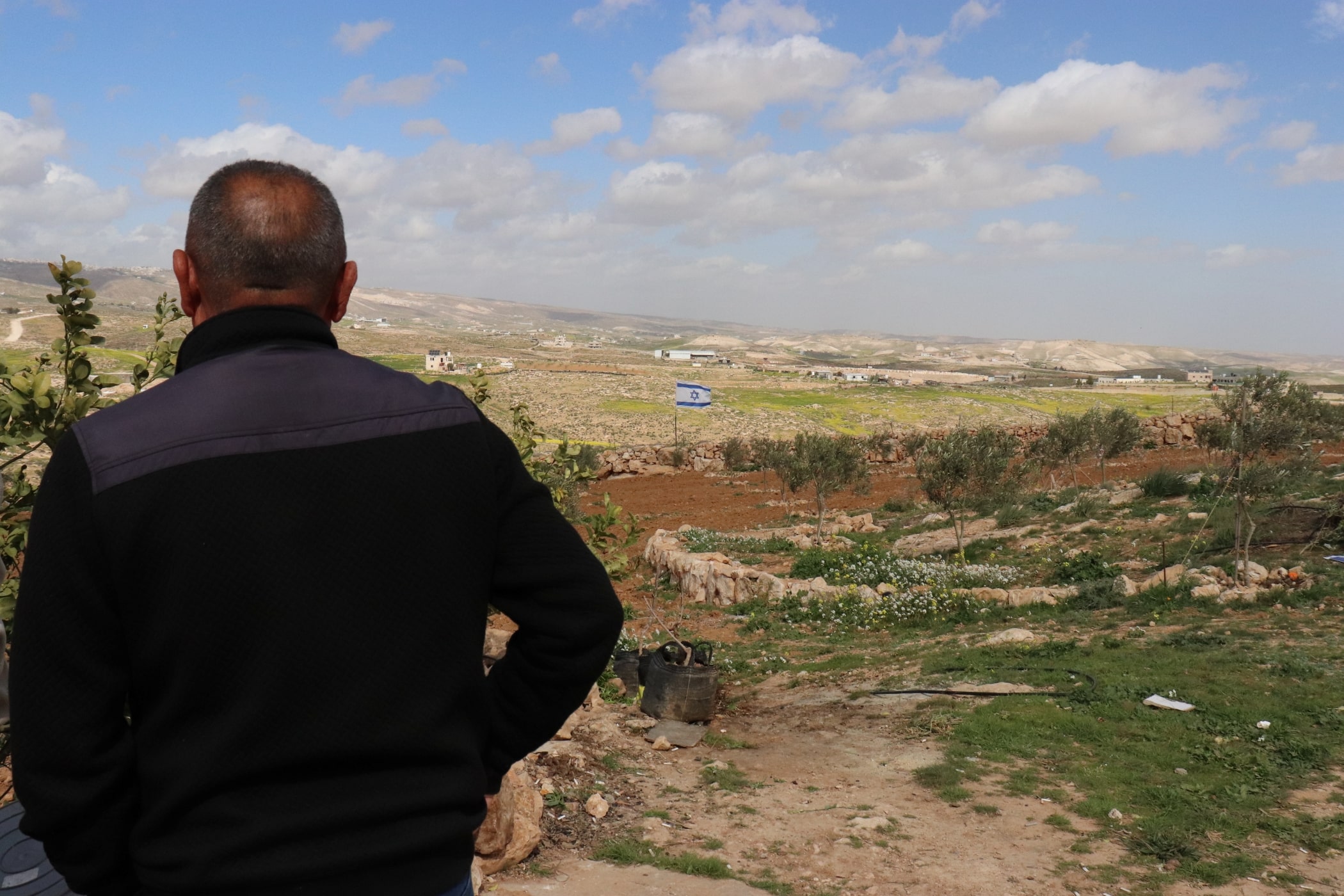
Palestinian farmer looking at Israeli flag placed by settler on his land
“I felt overwhelmed by the injustice of the situation in occupied Palestine, and powerless to help. This programme offered an opportunity to do something meaningful in response: to learn more about what is happening in the occupied West Bank, to show solidarity, and to engage more effectively in advocacy for a just peace.”
I didn’t know how I’d cope with seeing constant oppression, violence, and suffering. It is overwhelmingly and unspeakably sad;
“But what was equally remarkable is the resilience of the Palestinians we met who have lived their entire lives under these conditions, who continue in non-violent resistance, and who maintain hope for peace.”
Bethan, UK
We met with Palestinian communities, families, council leaders and farmers to hear about the effects of the Israeli occupation on their lives, and we visited repeatedly during our time, to monitor developments and to build relationships. Sometimes, we would also offer a protective presence. This might mean standing outside the gates of a primary school while children were arriving or leaving, as Israeli soldiers came close to the school in jeeps, with guns and tear gas.
The Palestinians we met were generous, friendly, and thankful for our witness.
“They spoke of a feeling of being abandoned by the international community, and therefore the importance of us coming from our various countries to see what is happening and to advocate for them.”
Bethan, UK
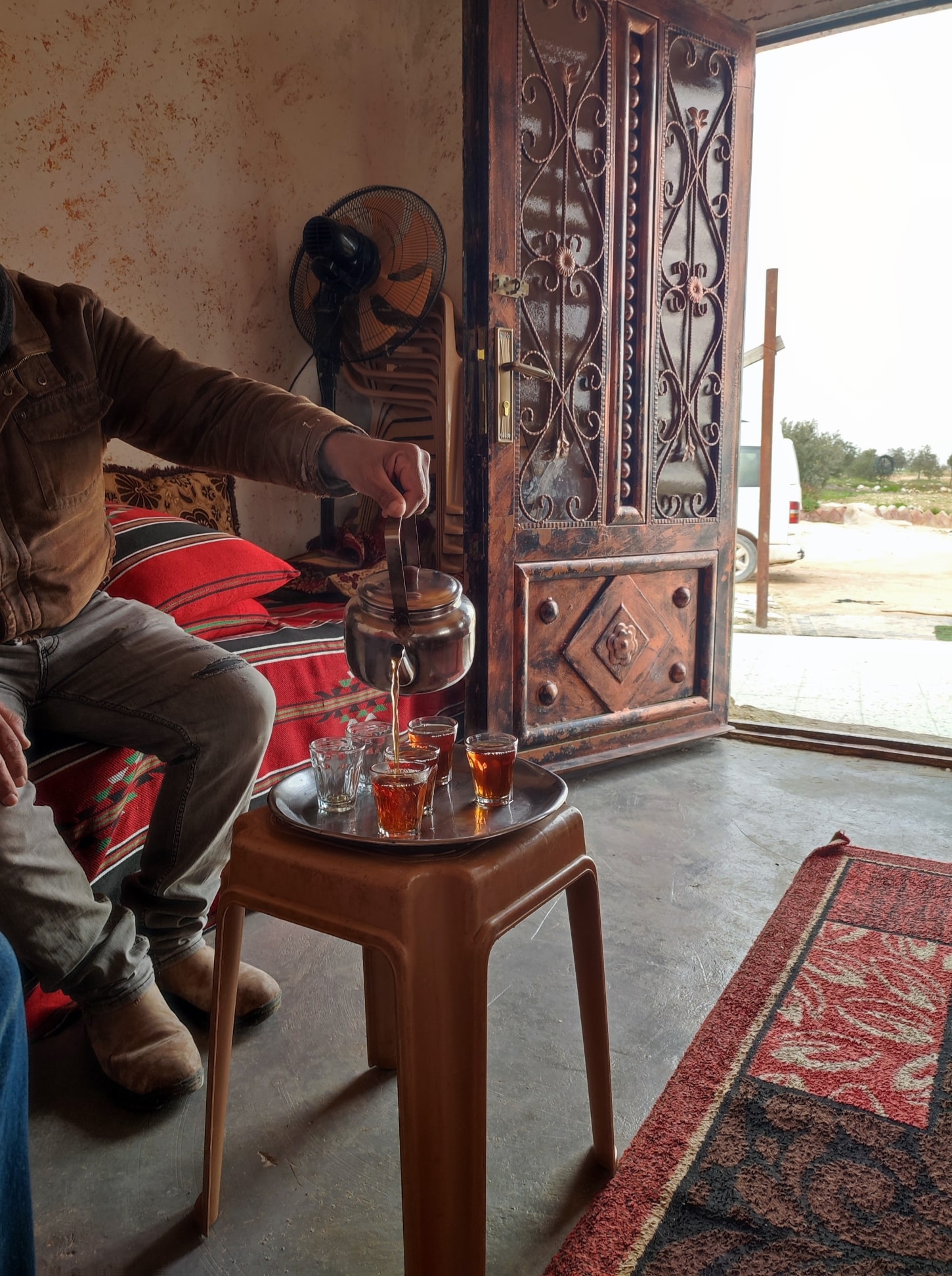
Having tea with Palestinian family we visited
There are also many Israeli human rights organisations and peace activists working non-violently alongside Palestinians towards human rights for everyone in the Holy Land who were receptive to international engagement on this.
“We saw much on a daily basis that was shocking.”
Bethan, UK
Visiting mostly rural Palestinian communities across the occupied West Bank, I saw how a combination of Israeli settler violence and oppression by the Israeli army prevents Palestinian farming communities from accessing their livelihoods. I saw sheep stolen, crops poisoned, roads blocked, and farmland stolen by both Israeli settlers and Israeli soldiers.
“This constitutes theft not only of a livelihood, but also of a culture and a way of life that has been practised for centuries.”
Bethan, UK
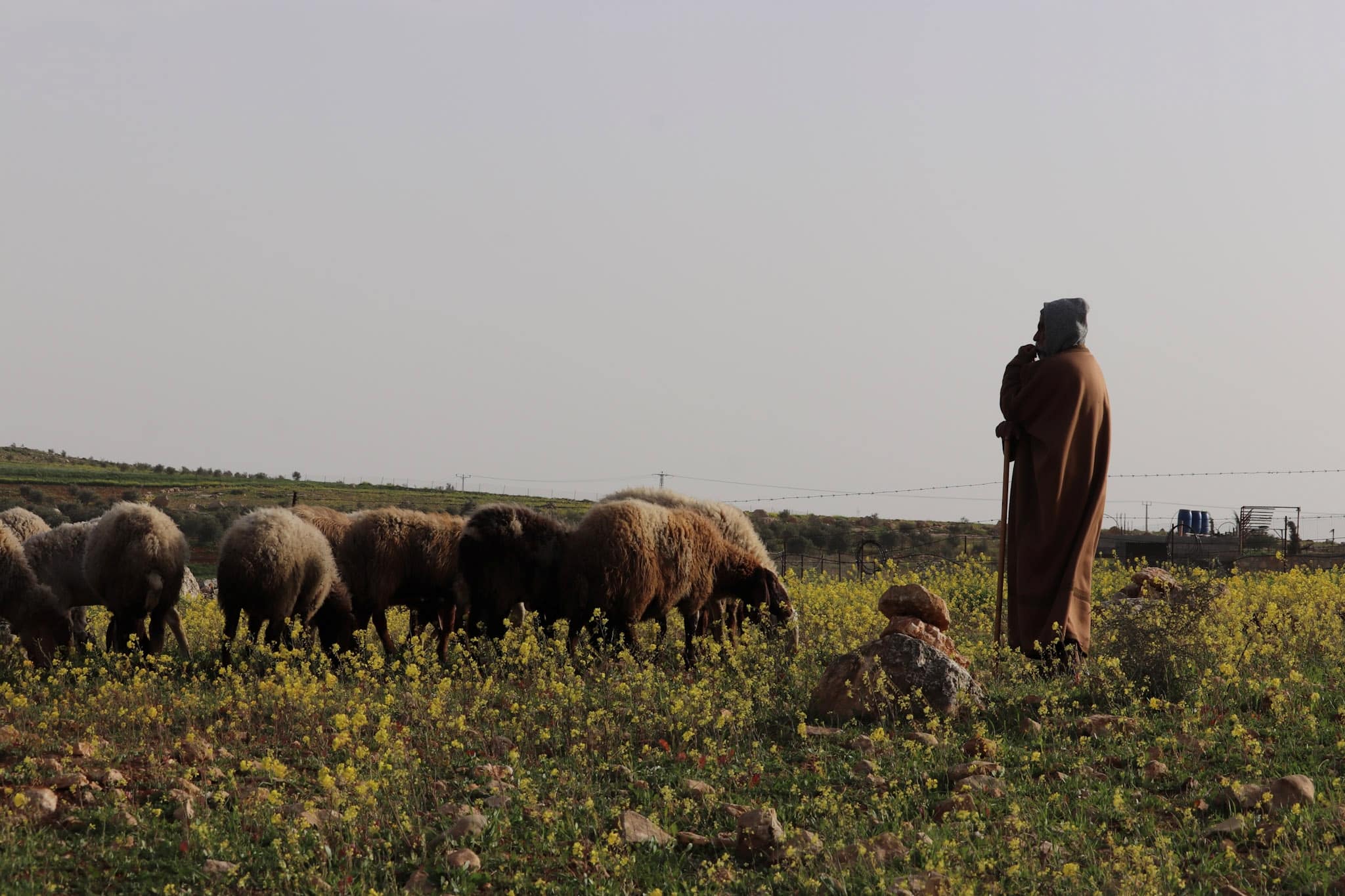
Moussa, Palestinian farmer shepherding, South Hebron Hills
Palestinians spoke of not being able to support their families without farming, but they also spoke of having nowhere else to go.
We saw Palestinian family homes demolished by Israeli bulldozers at little or no notice, with the family’s belongings still inside, the family, including children, watching on from the street.
We saw Palestinian towns raided by the Israeli army several times per week and cut off from all other places by army-installed gates locked across roads, blocking Palestinian people from getting to work, school, or medical services. Palestinians would not be told how long the road would be closed for, or why it was being closed.
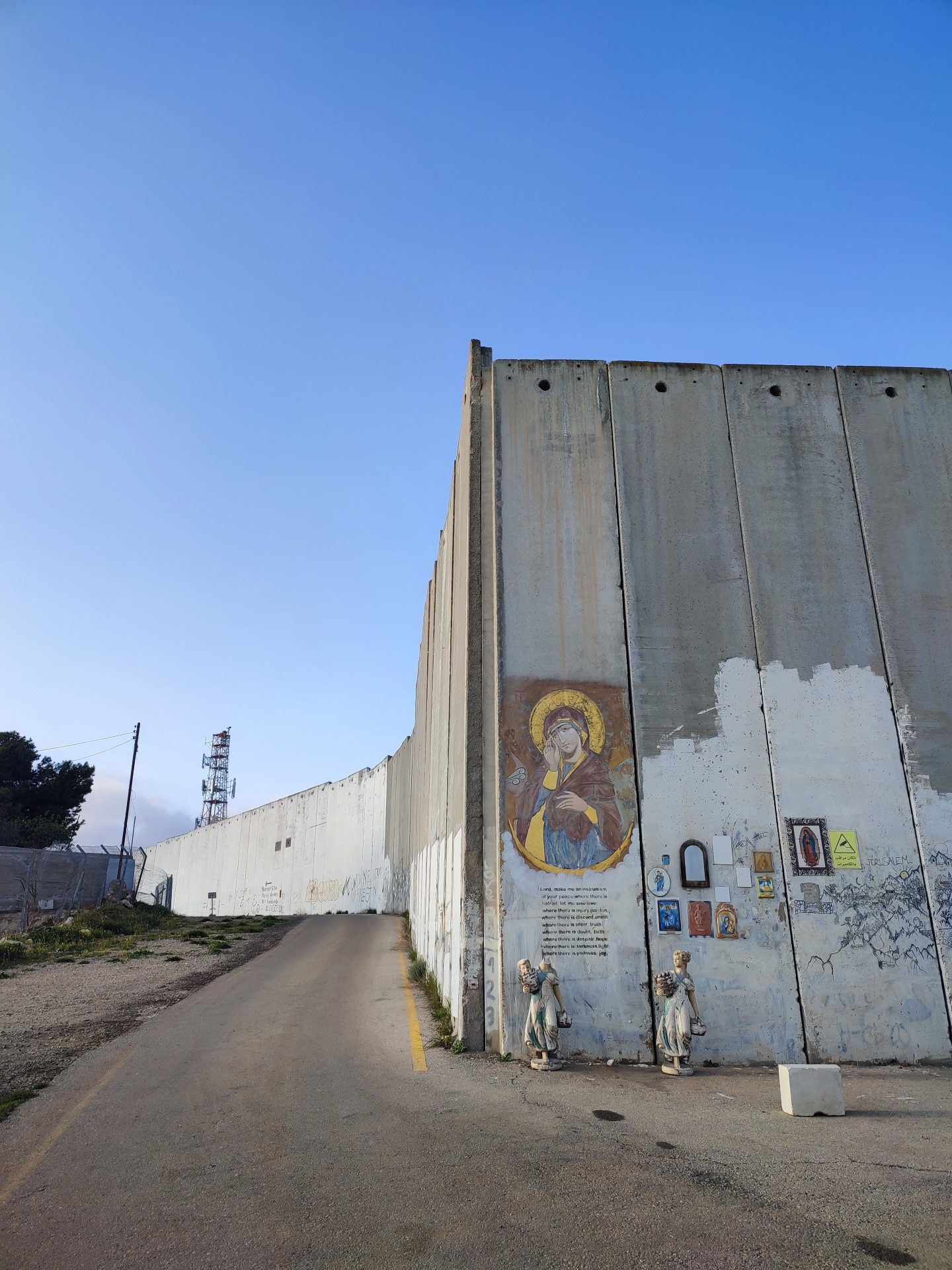
Separation Barrier
We saw Israeli settlers harass Palestinian shepherding families, throwing stones at their homes, destroying their trees and crops, trying to steal their sheep, and poisoning their water tanks. We saw these same Palestinians arrested when they complained to the Israeli police, and the Israeli settlers walking free.
“What I felt was often disbelief. Disbelief at what individual humans will do to their neighbour, and at how they can possibly justify it. ”
Bethan, UK
And disbelief at how institutionalised this violence is; it’s not only Israeli extremists at the fringes causing such suffering;
“[The violence] is enabled and supported by the Israeli state, whose army and police force commit or facilitate human rights violations across the occupied West Bank on a daily basis. ”
Bethan, UK
I feel incredibly grateful for the opportunity to meet and learn from these people; I’m inspired by those championing non-violence by their steadfastness and their hope.
Ultimately, the hope is for an end to the illegal Israeli occupation of Palestine, for equality, justice and peace for all people who call the Holy Land home.
Take action
1. Invite Bethan or one of our EAs to share their eyewitness testimonies at your event. EAs deliver talks for a broad range of audiences, in person and online. You can request a speaker by contacting us at eappi@quaker.org.uk.
2. Join the Time to Act campaign and email your elected representative to take action to end the UK’s support for Israel’s illegal occupation of Palestine.
3. Donate: The need for solidarity and accompaniment is more important than ever. Your support helps us maintain a solidarity presence in Palestine and Israel — witnessing human rights abuses and walking alongside communities under threat.
What does international law say?