

“For me, the Time to Act campaign is about refusing to look away. During my time in the West Bank, I met people showing extraordinary courage, resilience and generosity in incredibly difficult circumstances. Their stories need to be heard. We have to stand up for human dignity, international law and a just peace.”
Daniel, Ecumenical Accompanier
In June, over twenty churches and faith organisations, including EAPPI UK & Ireland and Quakers in Britain, united for the first time to launch the Time to Act campaign as the Just Peace Coalition. We are calling on the UK government to take concrete measures to end its support for Israel’s illegal occupation of Palestine and support a just peace for all those who call the Holy Land home. Alongside our partner Christian Aid, we’ve interviewed some our Ecumenical Accompaniers whose faith led them to bear witness to the occupation.
Our first interview is with Daniel, a management consultant, with a background in the civil service from the UK. At the end of the last year, he spent time in the occupied West Bank as an Ecumenical Accompanier with EAPPI UK & Ireland.
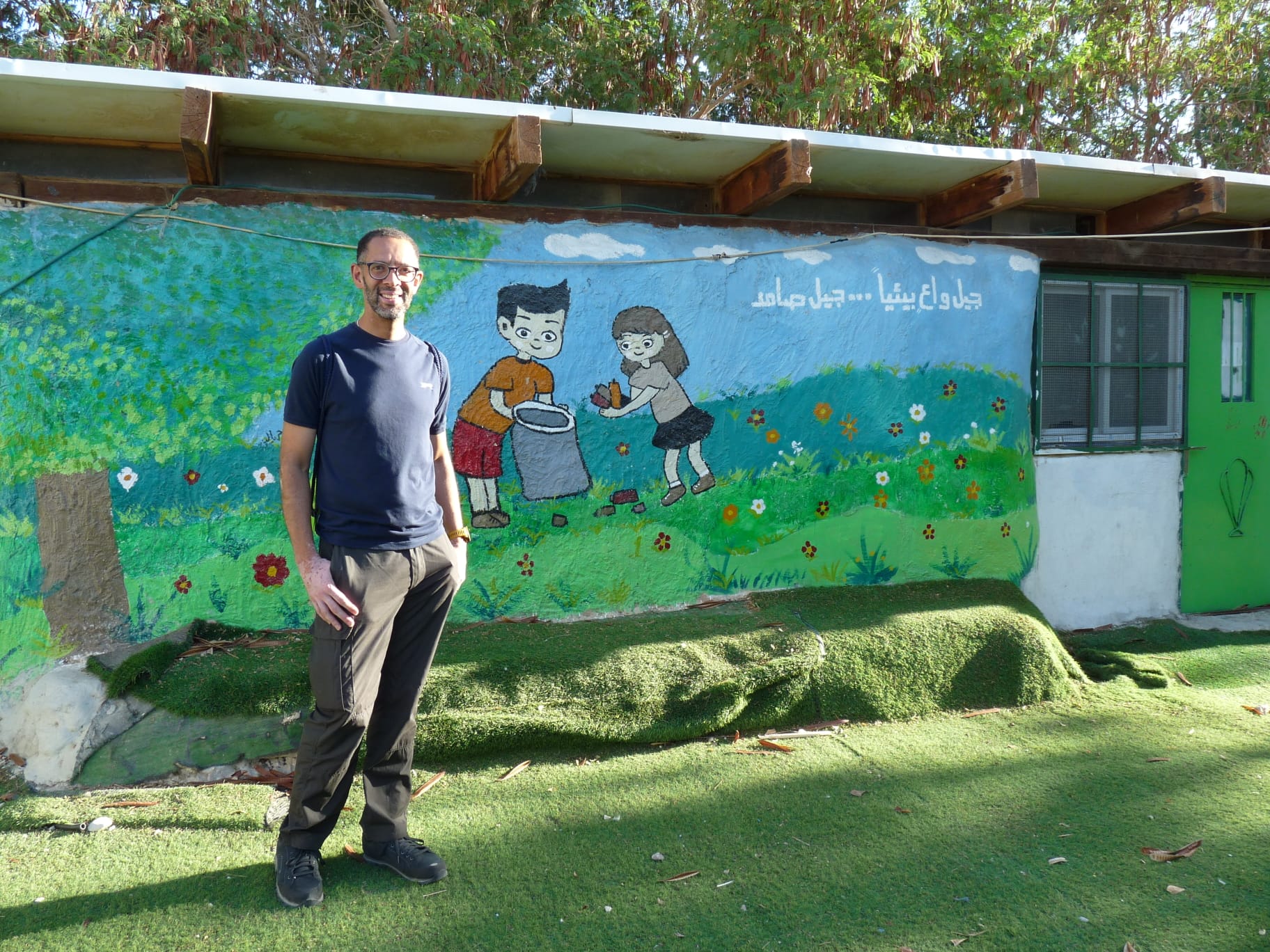
Daniel in front of a school mural painted by children from Khan al-Ahmar, occupied West Bank
During his time, he visited communities in occupied East Jerusalem accompanying and listening to those living under occupation, reporting human-rights violations to the UN and other bodies, and supporting Israeli and Palestinian groups working non-violently for a just peace.
Daniel said at its heart, his decision to go came from a sense that it wasn’t enough to observe from a distance.
“I’ve been to the Holy Land before. There is a 700km Separation Barrier, built by Israel to separate the West Bank and Israel. Its route was found to be illegal by the International Court of Justice in 2004, for cutting deep into the West Bank, annexing Palestinian land and natural resources.”
Daniel, Ecumenical Accompanier, UK
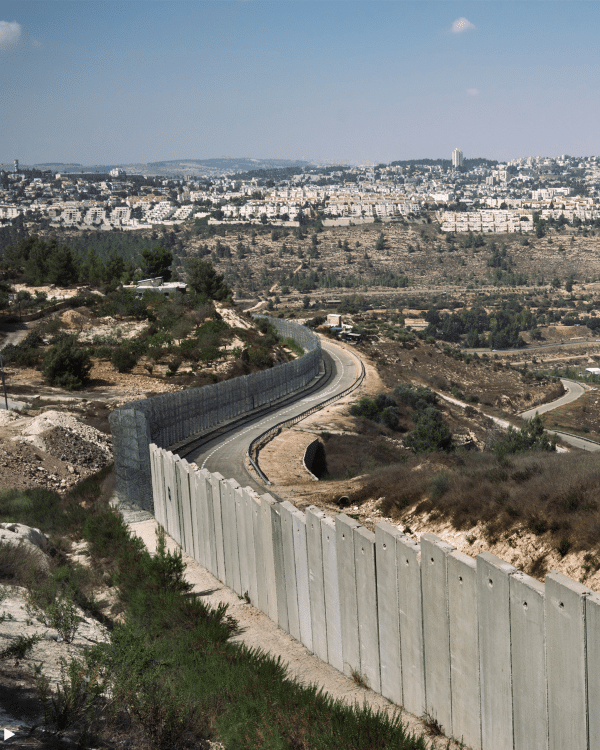
Separation Barrier
“I stood before part of it, where it cuts off the Palestinian town of Bethany, from where Jesus approaches Jerusalem in the final days of his life, from Jerusalem two miles to the west. It’s a wall which cuts the Palestinian people off from their own capital, their family, their livelihoods, their holy sites.”
“The place I had approached as a pilgrim was, for local Palestinian residents, a daily landscape of checkpoints, barriers, and political fragmentation. I knew the Separation Barrier existed. But standing before it changed the rest of my stay. It made me ask myself: what does it mean to call myself a Christian and to ignore the political marginalisation of the communities living in these holy places?”
“I wanted to be present – to listen, to witness, and in some small way to stand alongside people living through the reality of the occupation.”
Daniel said although his faith brings a sense of belonging, he has long felt a tension between the established place the Church holds in the UK, and the uncomfortable call Jesus makes on his disciples.
“That tension ultimately led me back to the West Bank.”
“One particular privilege for me was spending time in Jerusalem and meeting church leaders.”
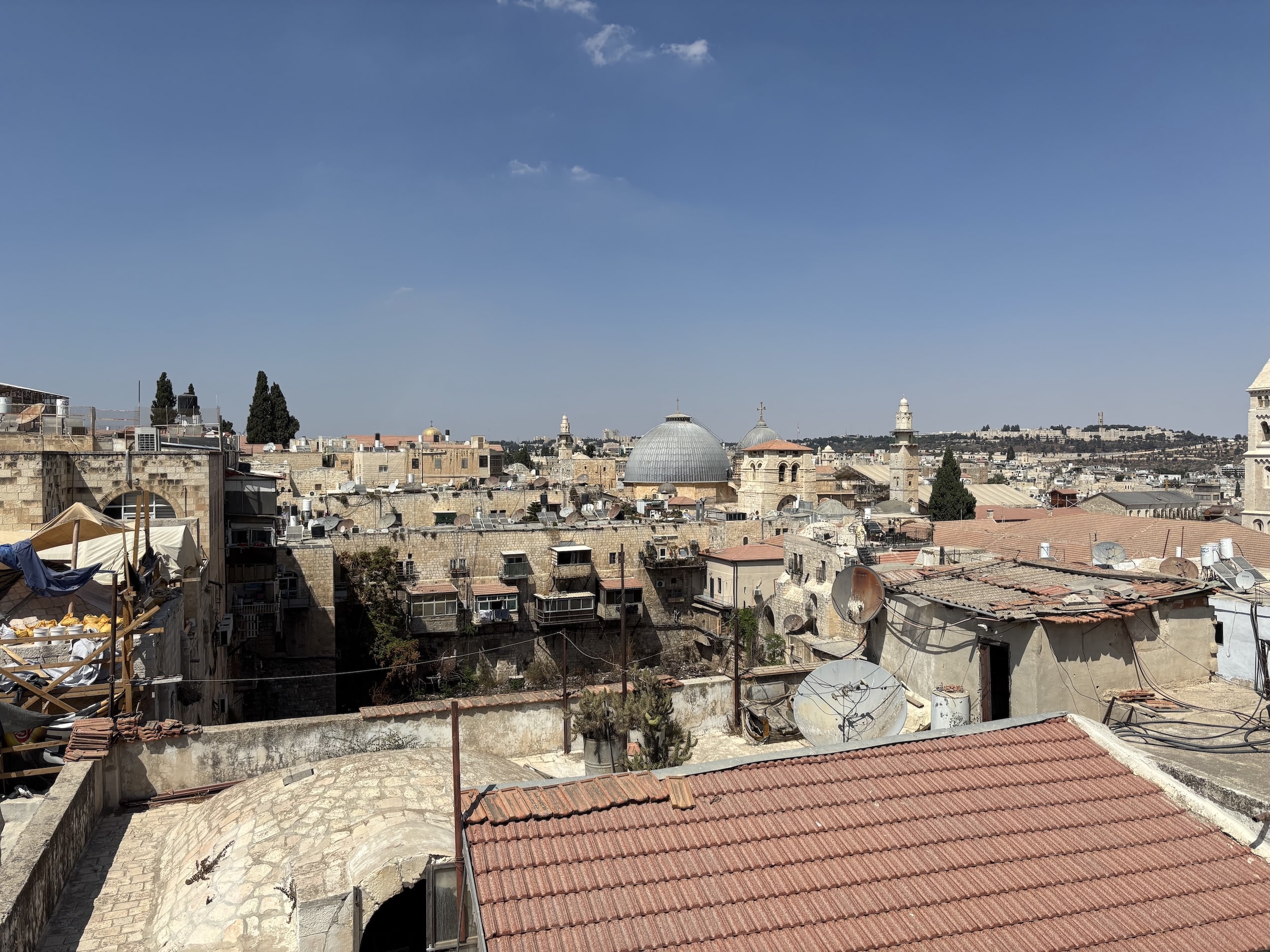
Rooftop view of the Christian quarter, Jerusalem
“A comment from the Orthodox Patriarch Theophilus has stayed with me: “Our daily presence is a miracle.” That really captures how fragile the situation is for indigenous Palestinian Christian communities whose continued presence in the Holy Land since the time of Jesus is now under existential threat.”
“There were also moments of confrontation. I remember telling a community leader I was from the UK, and he pointed directly at me and said, “It’s your fault.” It brought into sharp focus how Britain’s role in shaping the Middle East is not something abstract, but something people are still living with. As someone of mixed English/Caribbean heritage and therefore a product of complex colonial histories, it raised difficult questions about responsibility for the past and what it means to carry that, or to respond to it, in the present.”
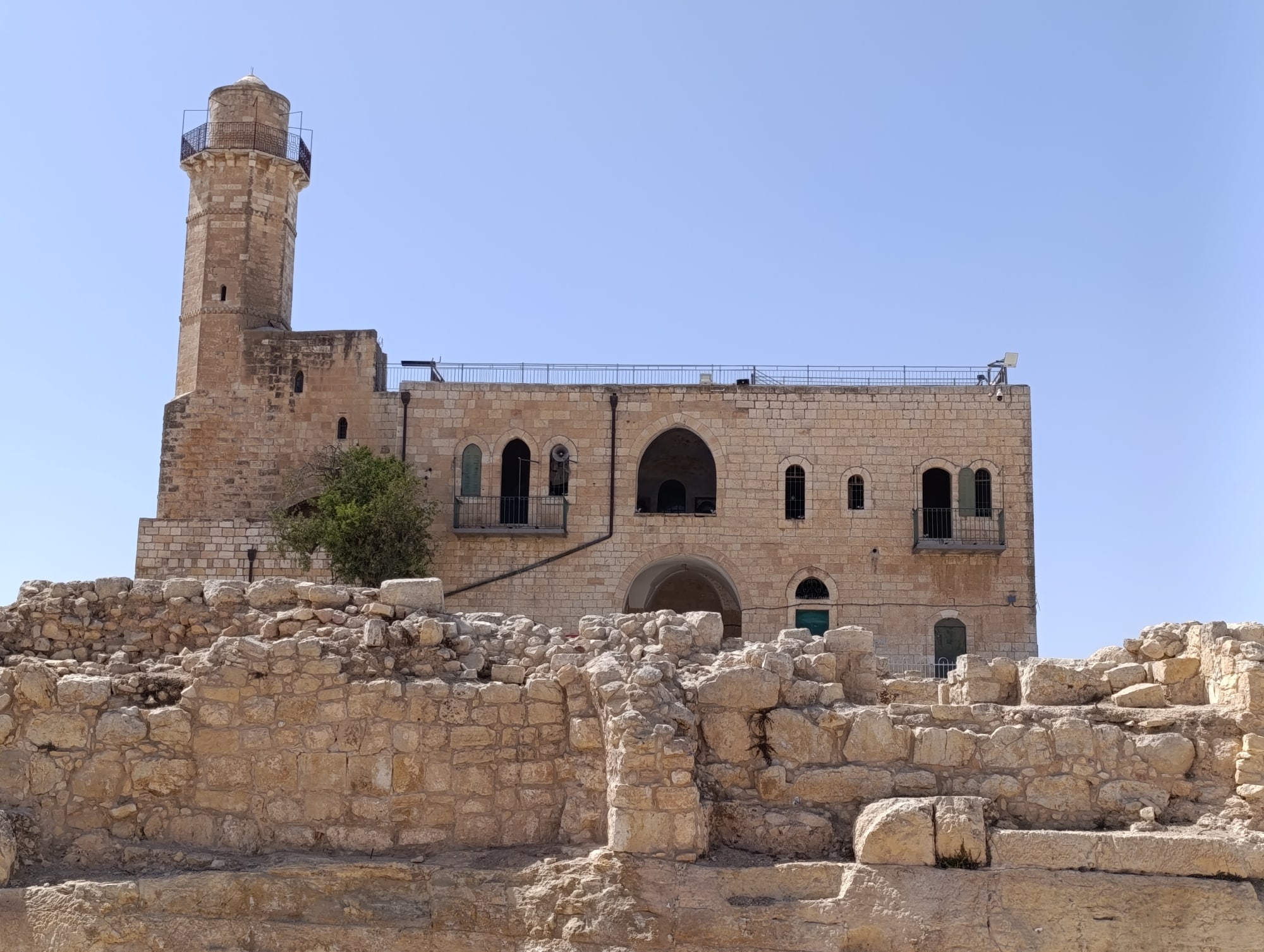
Daniel’s visit to Nabi Samuel, traditional burial site of the prophet Samuel which Israel is now moving to illegal seize
Daniel arrived during a ceasefire in the war on Gaza which, he said, people welcomed. But he observed what happened in the West Bank:
“What we saw was deeply disturbing. We felt the impact of the Israeli military moving from Gaza to the West Bank almost immediately: the Israeli government tightened checkpoints overnight and intensified raids on Palestinian villages. Before going, it was the uncertainty I found most challenging; not knowing what we might encounter, or how I would respond. There were moments of tension, but what affected me more was the cumulative impact of what we were seeing and hearing. Not one dramatic event, but the steady, everyday erosion of people’s dignity in a kind of normalised dehumanisation.”
“It’s also an incredibly militarised environment. The visibility of weapons, even in very ordinary settings, and the difficulty at times distinguishing between Israeli soldiers and Israeli settlers created a constant underlying tension you carry with you all the time.”
“Our aim was to accompany people, to hear and record their stories, and where possible to be a protective or solidarity presence. That might mean being with Palestinian children on their way to school, staying the night with communities affected by violence from Israeli settlers, or monitoring checkpoints.”
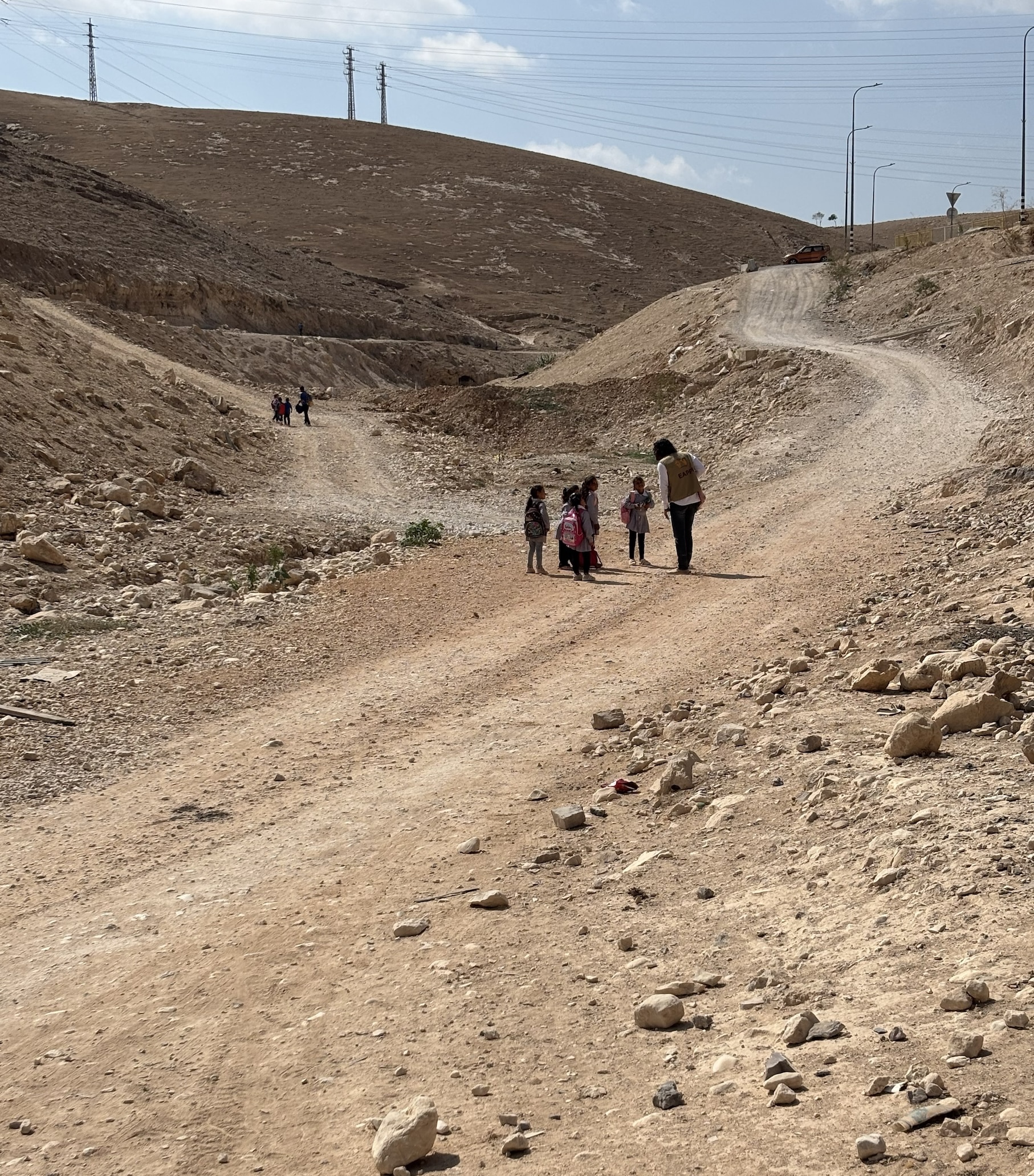
Daniel accompanying Palestinian children going to school, Khan al-Ahmar
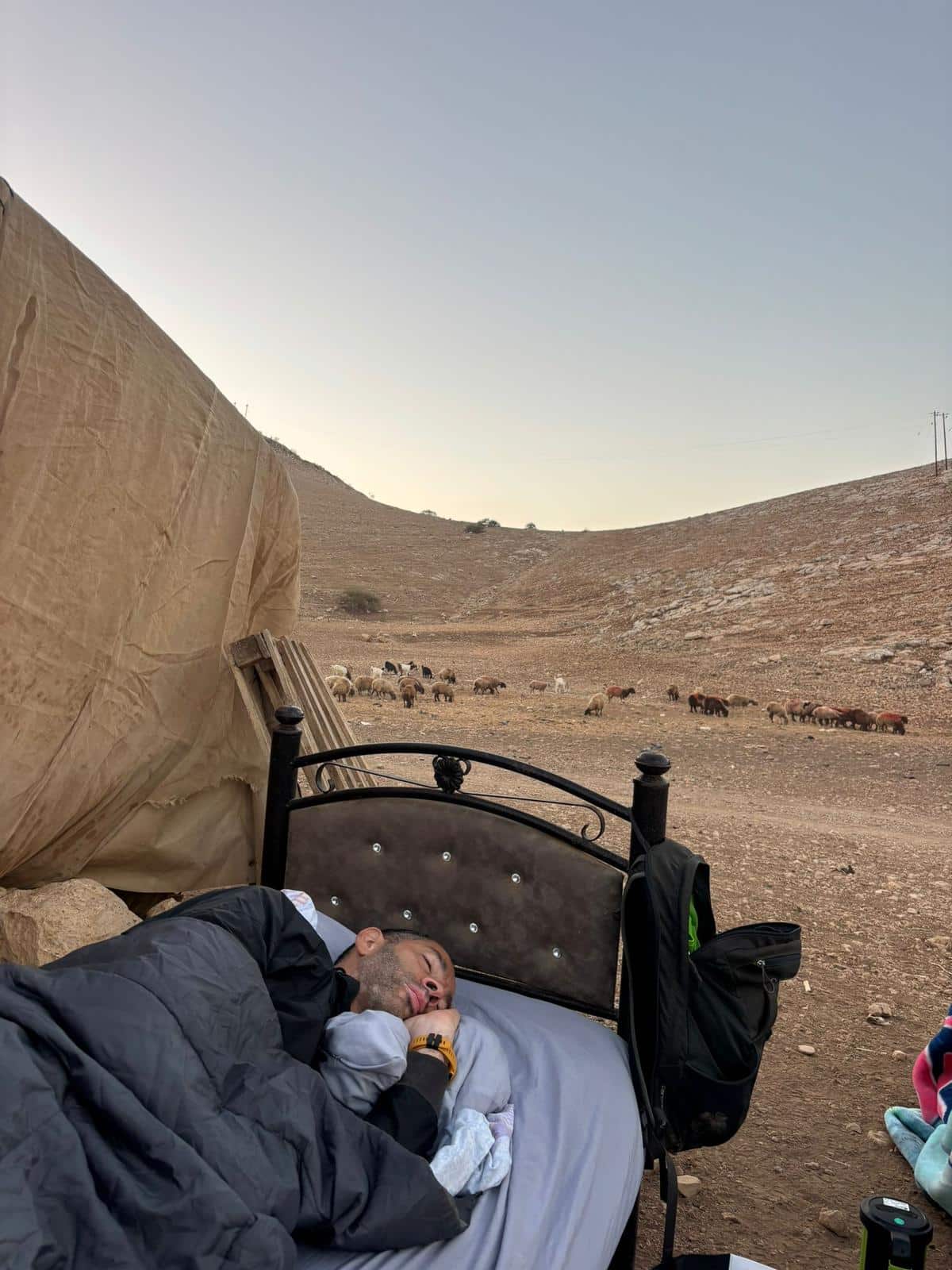
Sleepover in the Jordan Valley to be on lookout for Israeli settlers who come to disturb the community at night
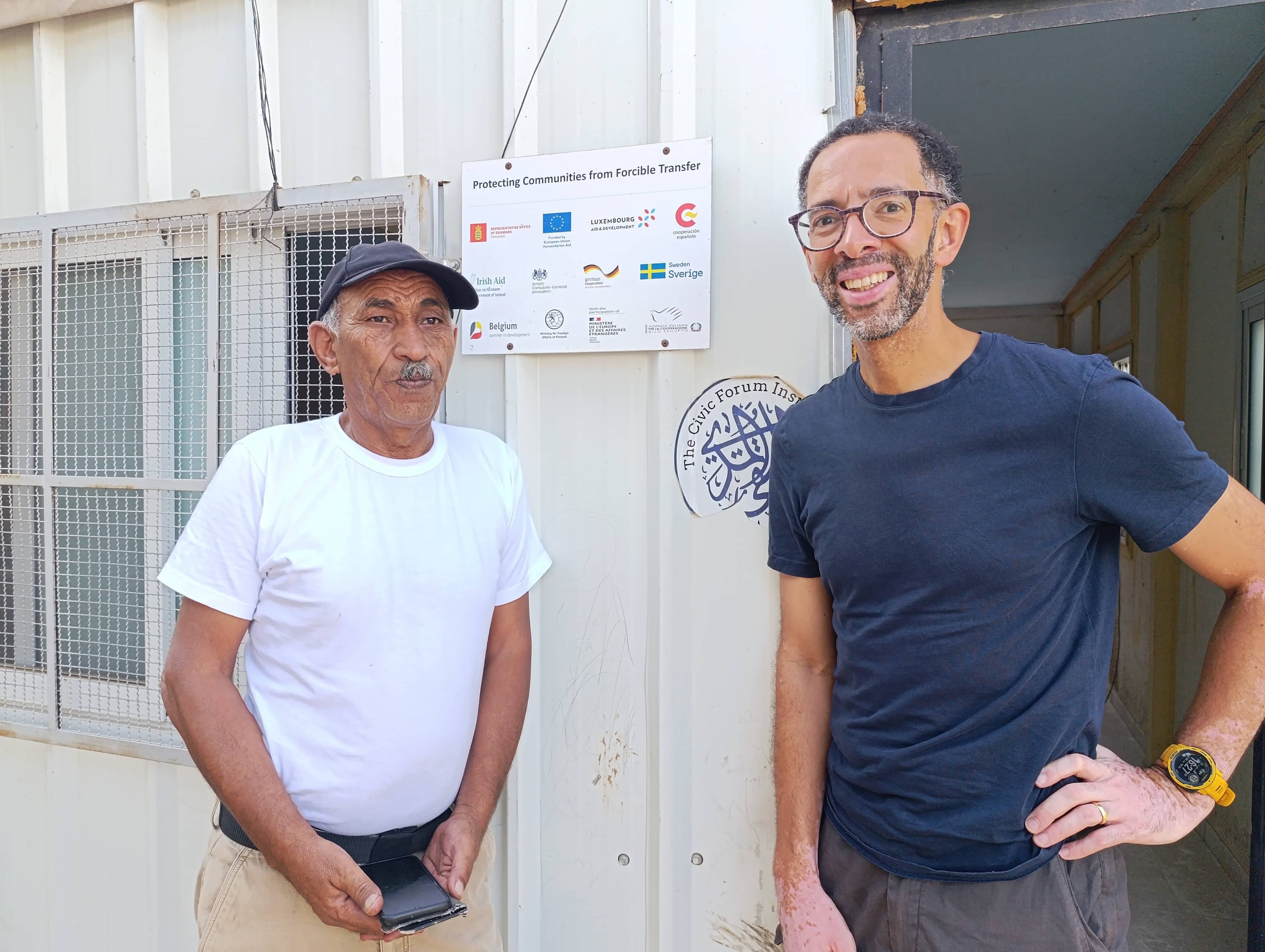
Daniel with community leader Abu Khamis, Khan al-Ahmar
“Among Palestinians, we were often received with extraordinary warmth and generosity, frequently in situations where people themselves had very little. There was a willingness to share stories, to invite us into homes, to offer hospitality. And at the same time, those conversations could be incredibly painful. People would recount experiences we could do very little about, beyond listening and recording. That tension between being welcomed so openly and feeling so limited in what you can offer in return was quite hard to sit with.”
“We also met a number of Israeli people through civil society who are actively working for a just peace: former IDF soldiers, activists, humanitarian workers. It was genuinely humbling to see the risks they take, going against the grain of wider public opinion in Israel and putting their lives on the line.”
“I spent time with a group called Rabbis for Human Rights, planting trees and harvesting olives as a symbol of human dignity.”
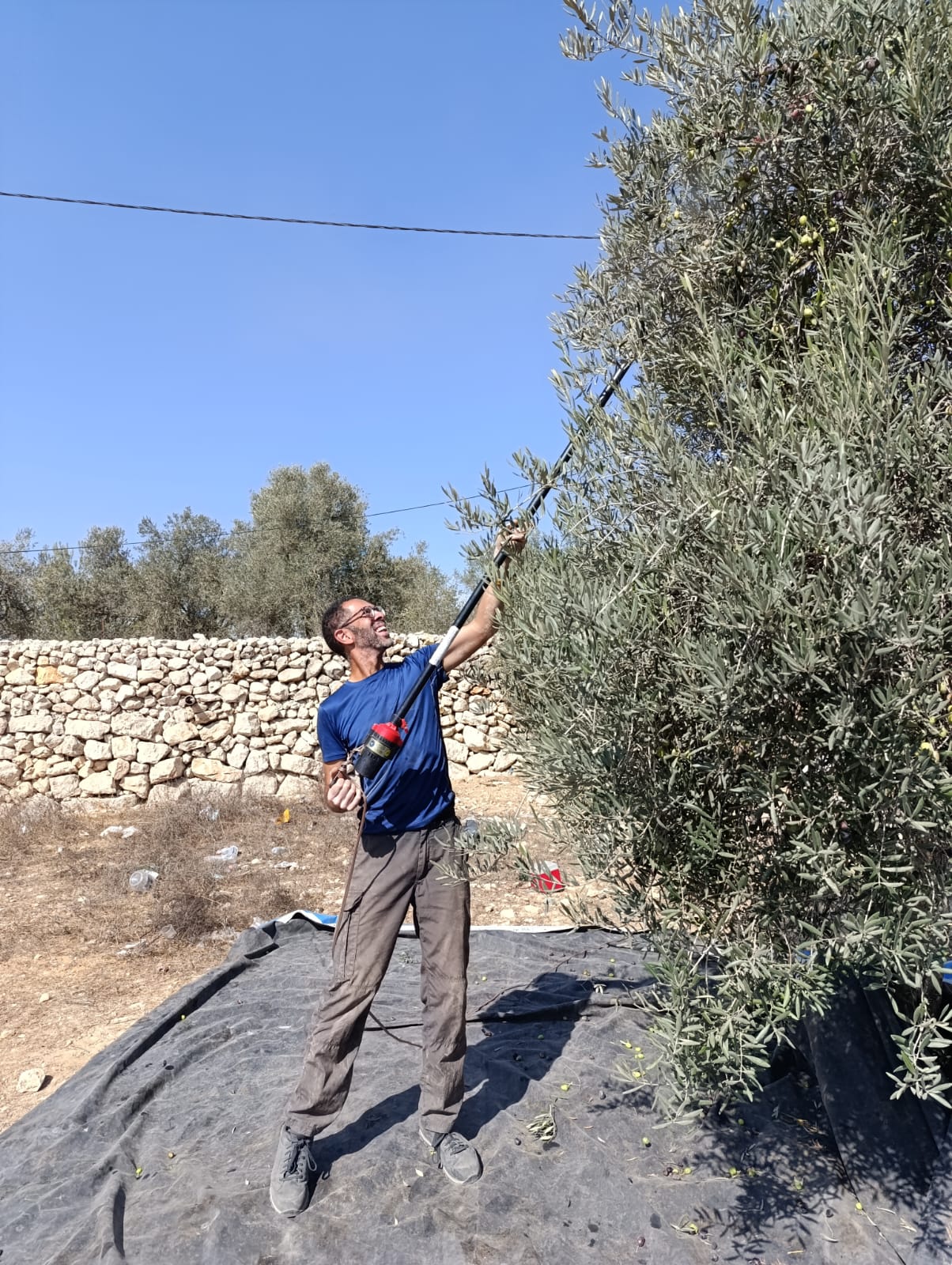
Daniel harvesting olives in Nabi Samuel
“The truth is I saw the worst – and the best – of humanity. I saw Palestinian schoolchildren forced to undress and hand over their textbooks to Israeli soldiers barely older than they were. I met mothers who had queued for hours at Israeli checkpoints for daily shopping, sometimes told to abandon food deemed ‘too much’ for one family.”
“I talked to families ordered by the Israeli authorities to demolish their own home because building work was carried out without a permit – a permit Palestinians cannot obtain. I saw religious liberty restricted, with Jerusalem and its holy places out of bounds for many Palestinian Christians and Muslims. And I experienced violence by Israeli settlers; I was told at gunpoint by settlers that I should stop what I was doing as the land would soon be theirs. Later I learnt a new illegal settlement had indeed been authorised there by the Israeli government on the Palestinian Christian farm in Bethlehem.”
“And yet, even in those bleakest days, I also saw incredible acts of kindness, bravery and resilience. The very people who had just been forced to demolish their own house offered me homemade cakes in the basement of their destroyed home.”
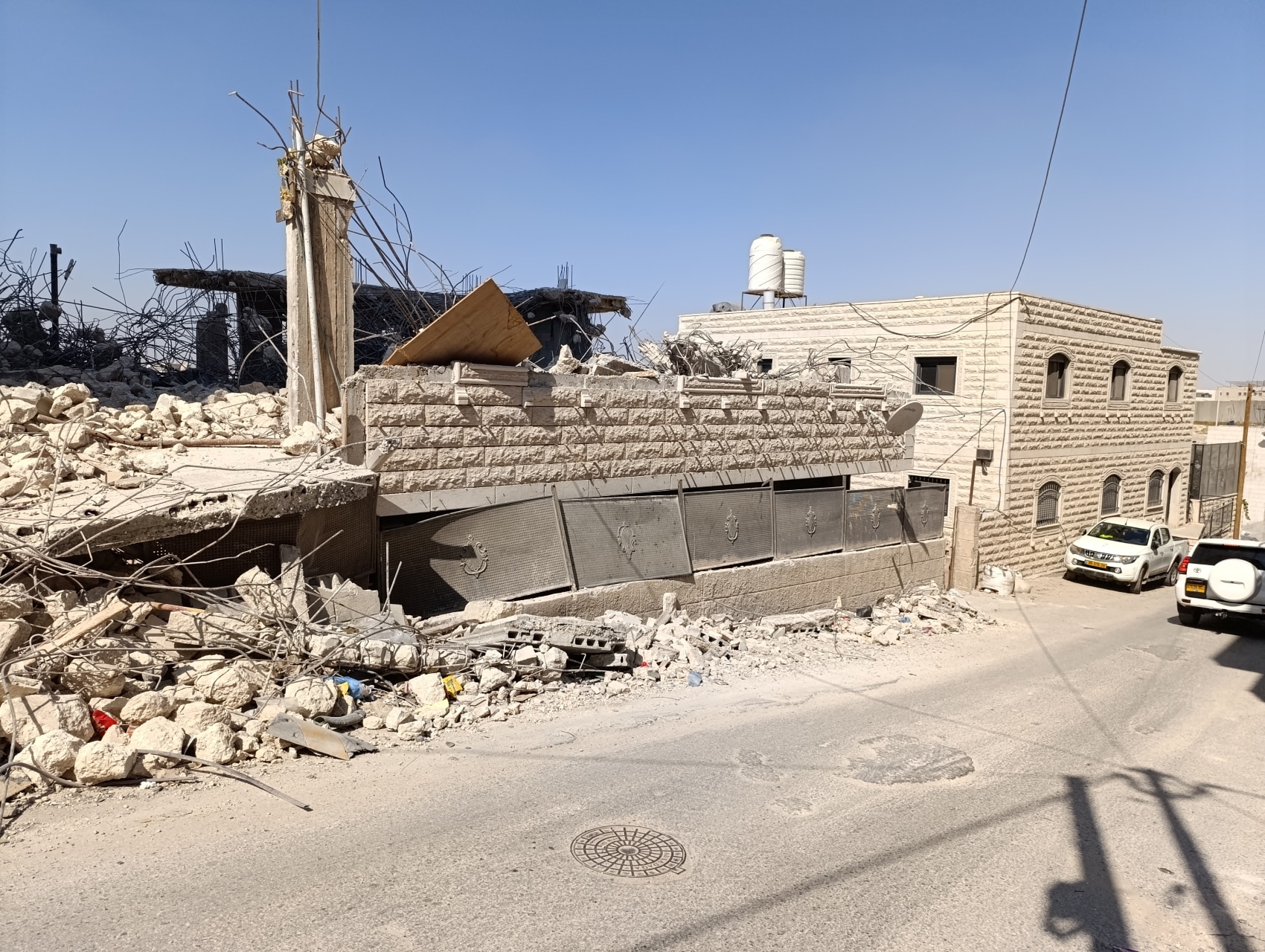
Daniel’s visit to Anata after a Palestinian home was forcibly demolished by the Israeli military, occupied East Jerusalem
“Overall, what I experienced wasn’t a simple contrast between two sides. It was a landscape of generosity, pain, mistrust, courage, and, in some places, real attempts – albeit fragile – to build something different.”
“Doing this work gave me a much more human, grounded understanding of the situation beyond headlines or politics. It strengthened my own commitment to dignity, dialogue, and non-violence – and to not looking away. There were moments during those months when I felt utterly overwhelmed, confused, distressed and angry. It was a sharp lesson in humility: I was not going to change the world, and I certainly wasn’t there as a hero.”
“I’m very grateful to my employer for giving me the space to join this programme and do something so different from my day job, and to the staff at Quakers in Britain for supporting me through the journey.”
“The programme plays a small role in helping ensure that what is happening is seen and not forgotten. But ultimately, it’s about working towards a future where people can live with dignity, safety, and equal worth. And even in very difficult circumstances, I did see people who are still working towards that. We all have a role in ending the occupation and helping a just future come to fruition.”
Take action
1. Invite Daniel or one of our EAs to share their eyewitness testimonies at your event. EAs deliver talks for a broad range of audiences, in person and online. Request a speaker by contacting us at eappi@quaker.org.uk.
2. Join the Time to Act campaign and email your elected representative to take action to end the UK’s support for Israel’s illegal occupation of Palestine.
3. Donate: The need for solidarity and accompaniment is more important than ever. Your support helps us maintain a solidarity presence in Palestine and Israel — witnessing human rights abuses and walking alongside communities under threat.
What does international law say?