

We stand in the idyllic surroundings of Masafer Yatta, a collection of Palestinian hamlets on the southern edge of the occupied West Bank. Endless rolling hills stretch out in every direction. Each rise and fall accentuates the landscape, where shepherds have roamed for thousands of years. The earth is dry and the sun is beating down on us.
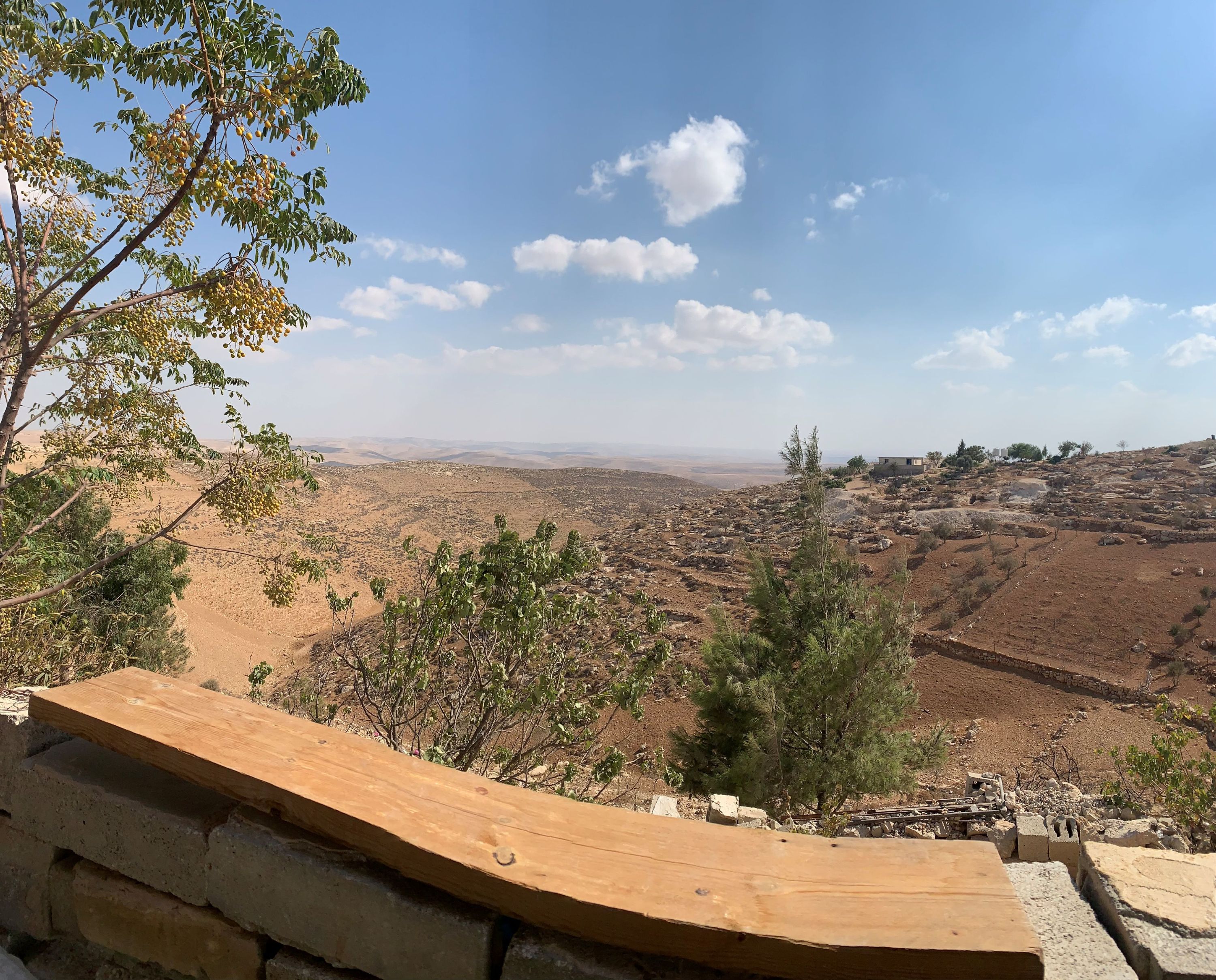
View from Jabber’s home, resident of Masafer Yatta
We have just awoken from a sleepover with a family, where we provide regular protective presence, due to the threat of settler and army incursions. Within minutes of climbing out of our sleeping bags, we notice a convoy of at least ten vehicles heading in the direction of Khalet Al-Daba; a village we had visited less than 24 hours before. We make out three bulldozers, multiple army vehicles, police and what appears to be a settler security van.
By the time we arrive, it’s too late. The water cisterns are smashed. Every toilet facility is destroyed. The tents used for shelter lie in ruins. The caves used as shelter, have been filled with rubble. The last remaining building has been reduced to ruins. Twenty-four families are left with nothing. Again.
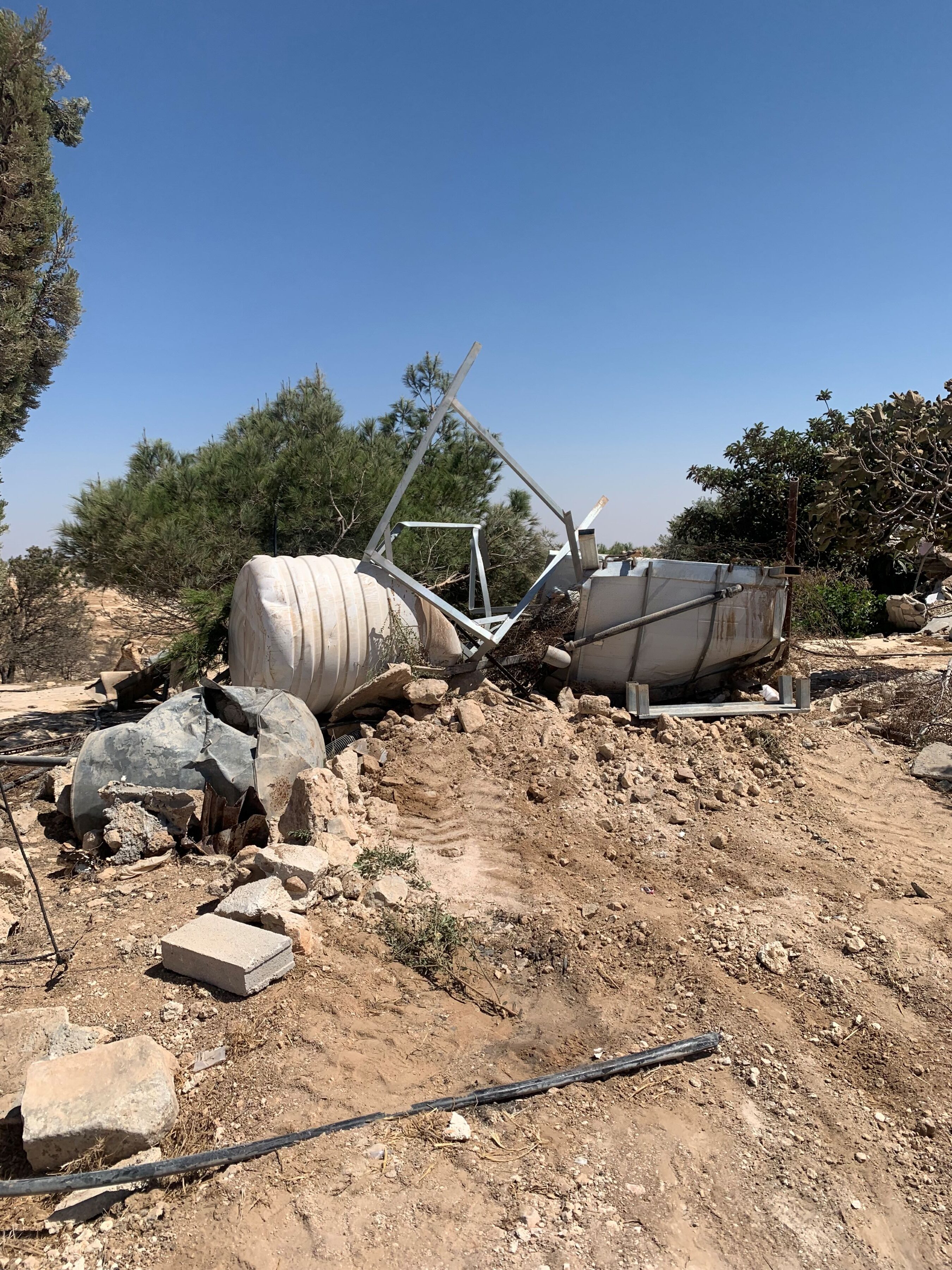
Community water cistern smashed by settlers, Masafer Yatta
Just one day prior, we had sat with residents to discuss how on 5th May 2025, Khalet Al-Daba suffered the largest demolition in the history of Masafer Yatta;
‘The demolition [in Khalet Al-Daba] left 85 per cent of the community’s structures destroyed and 60 per cent of its residents (84) displaced’
United Nations Office for the Coordination of Humanitarian Affairs
‘In under two hours, Israeli military forces demolished nine houses, six residential caves, 11 bathrooms, ten water tanks, seven water cisterns, four animal shelters, an electricity room, the majority of the village’s solar panels, and the community centre. By the time the army left, only four structures remained’
Jewish Currents
This is the 10th demolition since 2018.
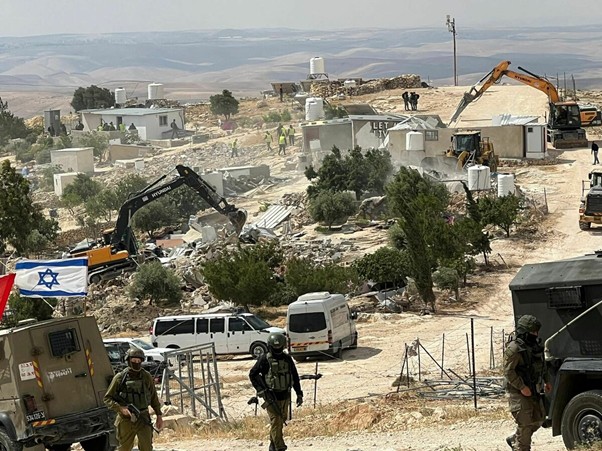
Khalet Al-Daba during a forced demolition, 5th May 2025 Photo Credit: Eid Suleiman
Masafer Yatta, a region of occupied Palestine, was relatively unknown to the international community until the release of ‘No Other Land‘, 2024 Oscar winning documentary. ‘No Other Land‘ underscored the human impact of the Israeli occupation, highlighting how the state of Israel uses multi-faceted means to force displacement of Palestinian farming communities.
‘The residents of Masafer Yatta are among the most vulnerable in the occupied Palestinian territory (OPT) and are dependent on humanitarian aid, due to a restrictive and discriminatory planning regime. The Israeli authorities have issued demolition or ‘stop work’ orders against most of the homes, animal shelters, cisterns, and community infrastructure on the grounds that they were built without building permits, which are almost impossible to obtain, impeding the development of adequate housing, infrastructure, and livelihoods.’
United Nations Office for the Coordination of Humanitarian Affairs
Communities in Masafer Yatta face both state violence and escalating settler attacks. Almost all villages experience regular incursions, with settlers entering Palestinian land and homes, grazing livestock on crops, damaging infrastructure, and even using water wells. Often armed and sometimes on ATVs, settlers intimidate and attack residents who resist. While settler violence has long been part of daily life, it has intensified sharply in recent months.
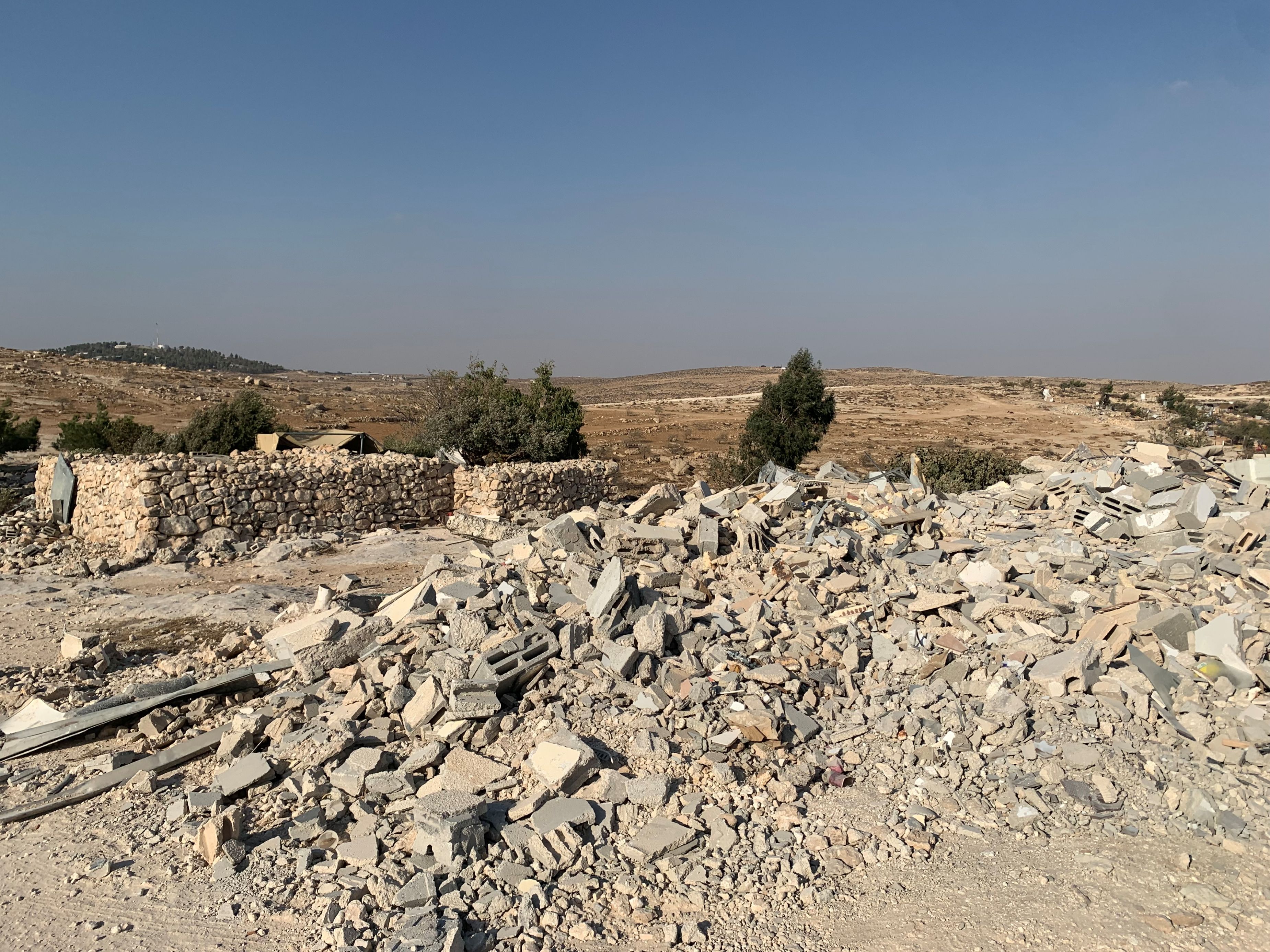
Home demolished by Israeli authorities, Masafer Yatta
‘During the first nine months of this year, OCHA documented over 1,200 attacks by Israeli settlers in 246 Palestinian communities across the West Bank, resulting in casualties, property damage, or both.’
Moussa, a 62 year old resident of Masafer Yatta, faces regular settler incursions and harassment.
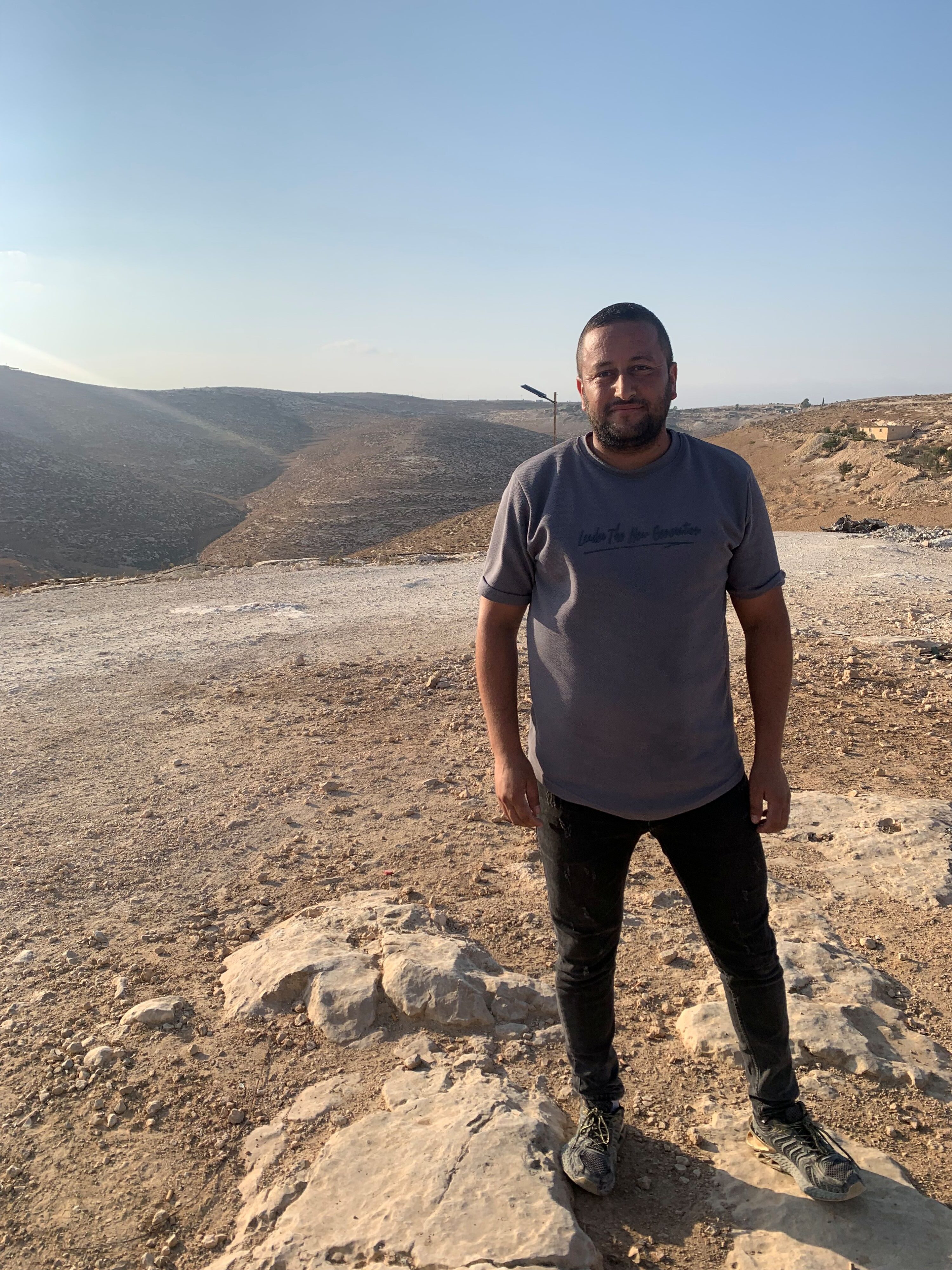
Moussa, Masafer Yatta
In July 2025 he was hospitalised, following an organised settler attack. Four masked men beat Moussa, so severely, whilst he was out grazing his sleep that he was left hospitalised. They broke his arm in two places, multiple fingers and his ribs. He no longer leaves the confinement of his fenced off home. There has been no consequences for the people who committed this violent crime. Yet, for Moussa this incident has changed his life completely. He is no longer grazing his sheep or working on his land. He tell us:
‘I’m a prisoner in my own home. It is Occupation inside the Occupation. The police, the army and the settlers are settlers are all working together to take our land!’
Moussa, Masafer Yatta
Concurrently to the continuous demolitions, the community of Khalet Al-Daba are also recovering from one such well-organised targeted settler attack.
‘On the night of 4 September, more than a dozen Israeli settlers raided Khallet Athaba’[…] and attacked residents with sticks fitted with knives. Fourteen Palestinians were injured, including seven children (one an infant), an elderly man, and a woman. The infant was affected due to pepper spray, while the others sustained bruises and fractures. The attack also caused damage to five structures, including four homes and the community’s school, as well as water tanks, solar lights, solar panel slabs, water pipelines, furniture, and household items. The settlers fled before Israeli forces arrived.’
The settlers attacked the villagers whilst they slept. They came armed with weapons and tear gas. The youngest person affected was a 3-month-old child. The eldest, an 83-year-old man. Many were hospitalised.
We also met Jabber Dababse, a local resident.
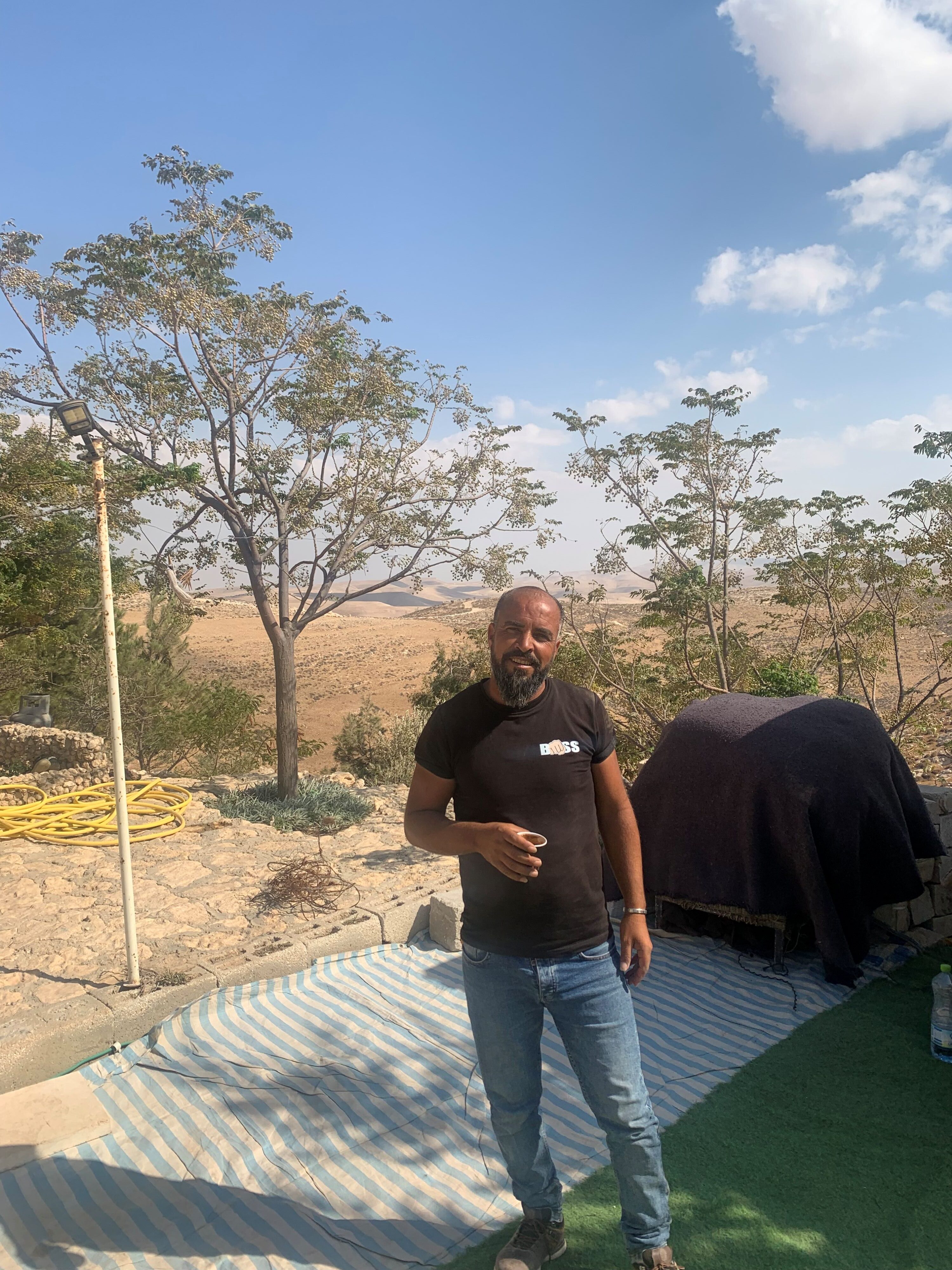
Jabber, resident of Masafer Yatta
‘We called the police. They told us they didn’t know where we were located. It took them a long time to come. The settlers were left to do whatever they wanted to do to us and leave before the police arrived! I think some of the settlers believed we were dead.’
Jabber, Masafer Yatta
The prospect of being killed by a settler in Masafer Yatta, is not a far cry. Just months earlier, on 28th July 2025, Awdah Hathaleen, local teacher and peace activist, was shot dead on his land. A motion demanding justice, signed by 11 members of UK parliament, condemned the killing and “deplored” the release of Awdah’s killer, Yinon Levy, whilst also criticising President Trump’s decision to revoke Levi’s sanctions. The United Nations describe settler violence:
‘Communities live in a constant state of fear. In addition to the threat of their homes being demolished, communities also face violence from settlers residing in a nearby outpost, who have blocked roads in the area, attacked herders, and set haystacks and grazing areas on fire, undermining their physical security, negatively affecting mental and psycho-social health, lowering their standard of living, and increasing the dependence on humanitarian aid.’
United Nations
These types of settler attacks and demolitions are not isolated cases. Nor are they coincidental.
‘The Israeli apartheid regime and its representatives actively aid and abet the settlers’ violence as part of a strategy to cement the takeover of Palestinian land.’
Settler Violence = State Violence | B’Tselem
During a press conference on 3rd Sept 2025 Israeli Finance Minister, Bezalel Smotrich, unveiled a proposal for Israel to annex 82 percent of the West Bank.
‘International inaction has also allowed Israeli settlement policies and settler violence to thrive and has entrenched impunity. On 21 January, President Donald Trump revoked all US sanctions on violent Israeli settlers. The very existence of all Israeli settlements in the Occupied Palestinian Territory (OPT) – regardless of their status under Israeli law – flagrantly violates international law, yet states have repeatedly failed to stop their expansion or to ensure protection for the occupied population in the OPT. Even after the International Court of Justice’s Advisory Opinion of July 2024 declared Israel’s presence in the OPT unlawful and called for its dismantling with 12 months, states have failed to act.’
Take action to protect Masafer Yatta.
1. Send this eyewitness story to your MP and TD asking them to take action to stop the ethnic cleansing of Masafer Yatta.
2. Follow Basel Adra, Palestinian activist and journalist and Yuval Abraham, Israeli peace activist and journalist to follow and share the latest updates from Masafer Yatta.
2. The need for solidarity and accompaniment is more important than ever. We can’t do this without you. Your support helps us maintain a solidarity presence in Palestine and Israel — witnessing human rights abuses and walking alongside communities under threat. Donate today.
What does international law say?