

“Growing up in Northern Ireland during the Troubles helped me connect with what these women were experiencing.”
Helen, Ecumenical Accompanier
My name is Helen and I’ve just come back from the Israeli occupied West Bank with the Ecumenical Accompaniment Programme in Palestine and Israel (EAPPI). I was there as a human rights monitor, also known as an Ecumenical Accompanier (EA), and spent time visiting communities around East Jerusalem. I want to tell you about a particular place I visited during my time and how it made me reflect on a decision I made after growing up in Northern Ireland.
I first heard about the programme when I visited my daughter in 2022 in Jerusalem when she was an EA herself.
Being in an occupied city reminded me a little of growing up in Northern Ireland in the 60s and 70s, during what has been called ‘The Troubles’. During that visit, I saw very young children having to travel alone through Israeli checkpoints just to get to school. Checkpoints are movement obstacles staffed by armed Israeli soldiers across the occupied West Bank which Palestinians must go through to access work, school and worship. As a teacher seeing children subjected to this moved me and led me to want to come back to be a witness of life under Israel’s illegal occupation.
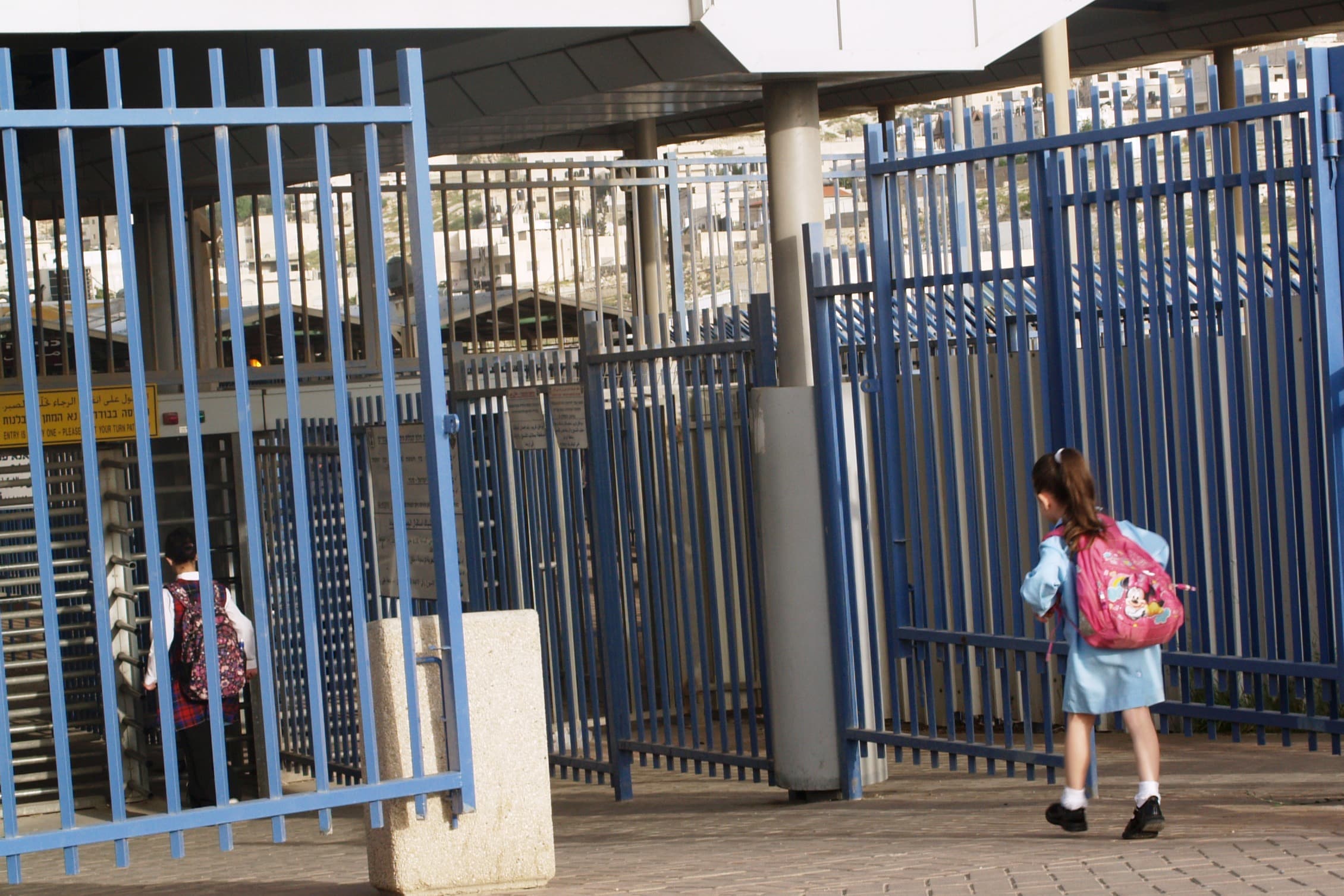
A little girl on her way to school through an Israeli checkpoint, Jerusalem
When I returned this year as an Ecumenical Accompanier, my fellow EAs and I were invited to visit a women’s centre tucked away in Abu Dis. This university town southeast of Jerusalem is home to a centre which welcomes Palestinian women of all ages to develop traditional skills, earn an income, learn how to manage their health and support one another emotionally.
When we arrived, we were greeted and warmly welcomed. The women who were engaged in a sewing session where they were learning and practicing traditional Palestinian embroidery skills. Some were working on items such as table runners and bags, which would later be sold in Oslo. This helps the women generate an income while also preserving Palestinian culture. The creations were beautiful and during a later visit we had the opportunity to both learn some stitches and to purchase a few items.
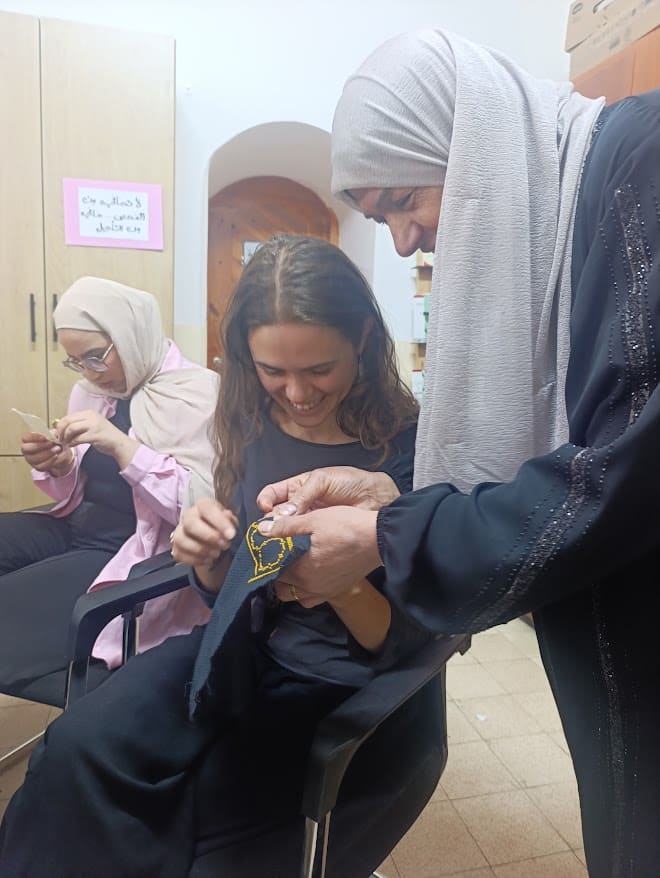
Learning a basic stich, Abu Dis
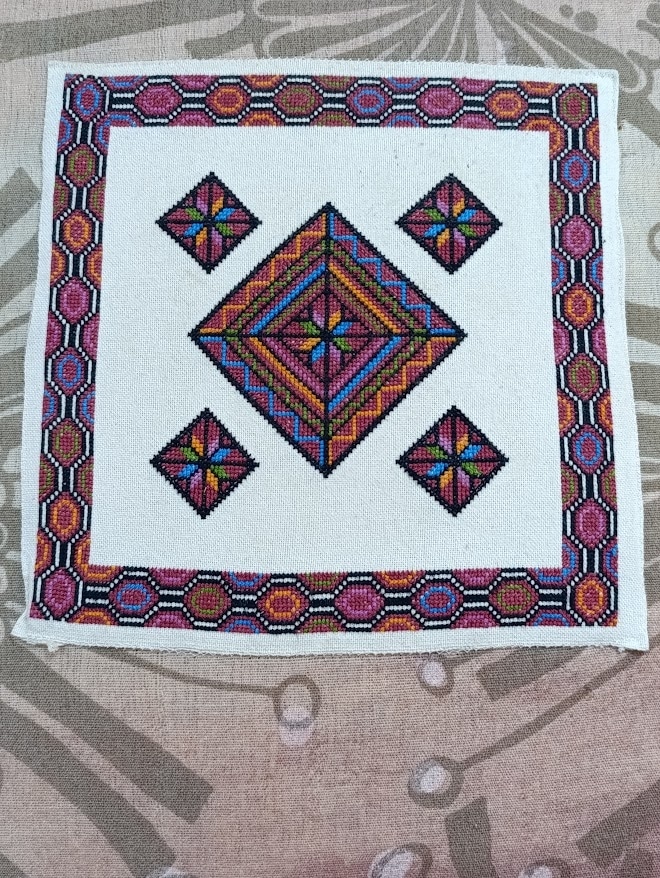
Traditional Palestinian embroidery, Abu Dis
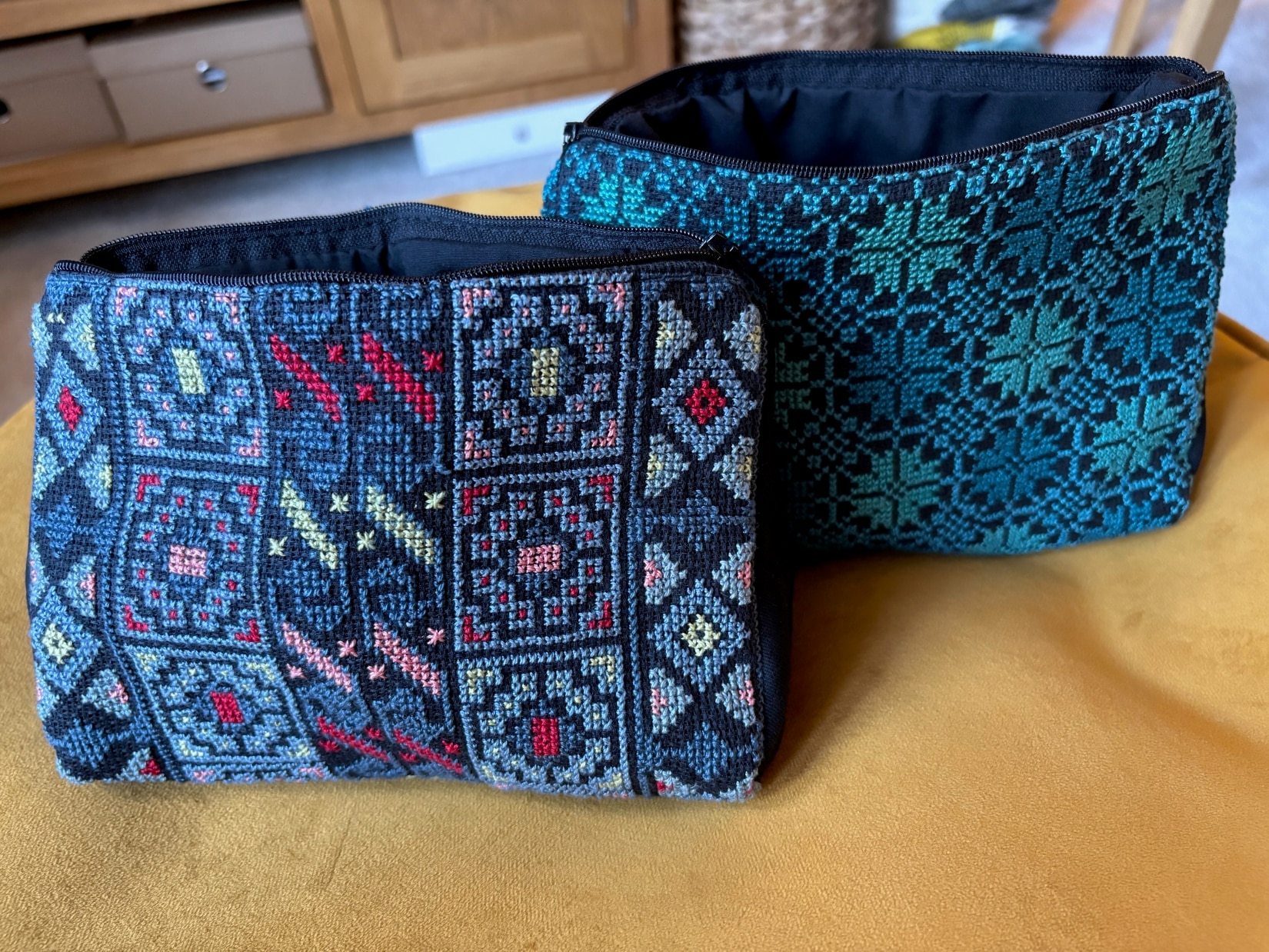
Purses with traditional Palestinian embroidery, Abu Dis
We had an instant rapport with the women, we laughed together, hugged each other, and drank coffee and ate pastries. We shared information about our lives through photographs and gestures with the help of the daughter of one of the women who acted as a translator for us.
We heard how the center was established to provide women with a shared resource of embroidery materials, allowing them to generate some income, while also being a place to meet and give each other support. In addition, the center includes a clinic space, where a doctor is available for the women twice a week, planned so that she is there when the sewing lessons take place. Our volunteer interpreter showed us photographs and videos of the conferences the group have attended to learn how violence against women is wrong and what they can do if they experience this. And the women told us that an important focus of the center is to empower them to manage their health. They are taught to monitor signs and symptoms of diseases such as breast cancer so they can be tackled early on and hopefully have a better long-term prognosis.
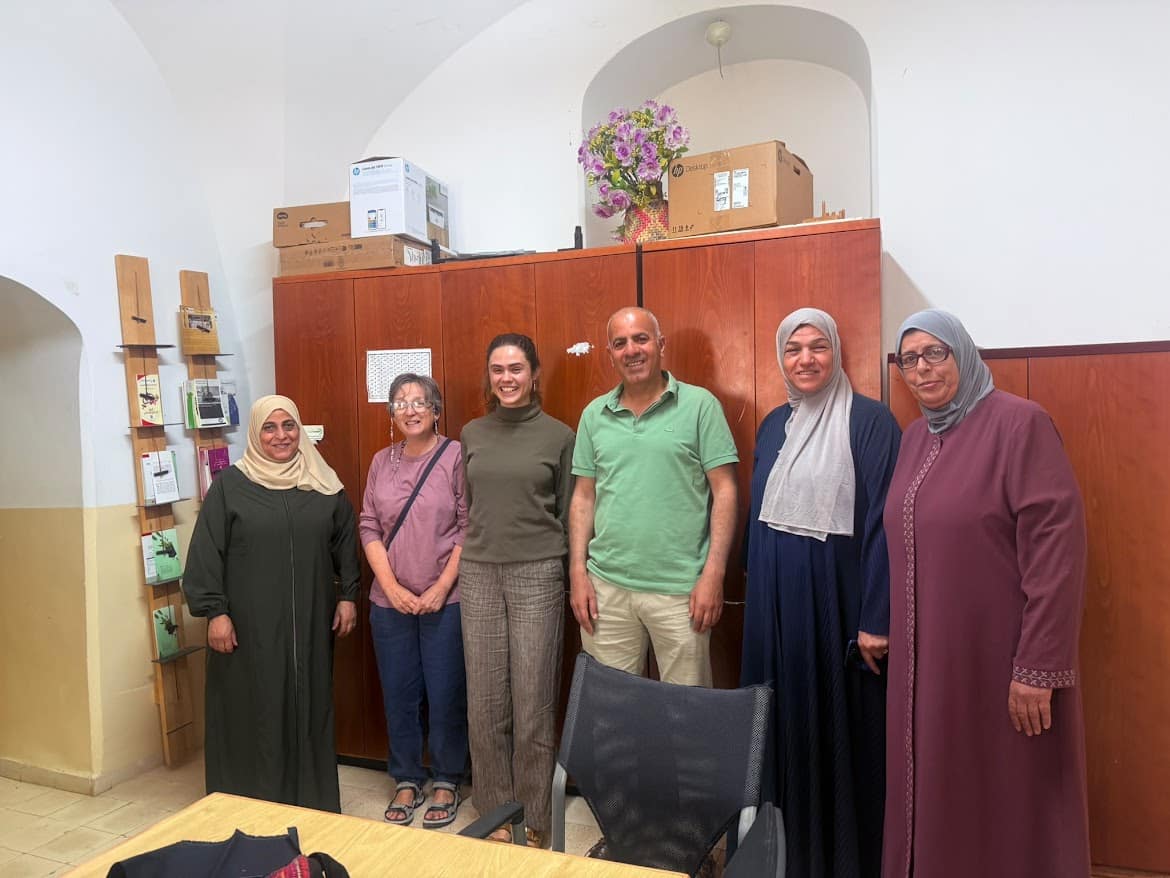
My fellow EA and I meeting the team at the centre, Abu Dis
Behind the joy in the room is the stark reality of life under Israel’s occupation. At one point our interpreter was reluctant to translate a conversation for me – she thought it would make me too sad.
In the early 2000s the Separation Barrier built by the Israeli government cut the town in two, separating half of the town from Jerusalem and dividing families and friends.
Abu Dis is a close neighbour of the town of Al Eizariya, the site of Lazurus’ tomb and where he was raised from death by Jesus. Until the construction of the Separation Barrier, Al Eizariya was an important tourist and pilgrimage site that brought employment and income to Palestinians living in the area. The Separation Barrier has effectively stopped this tourist trade.
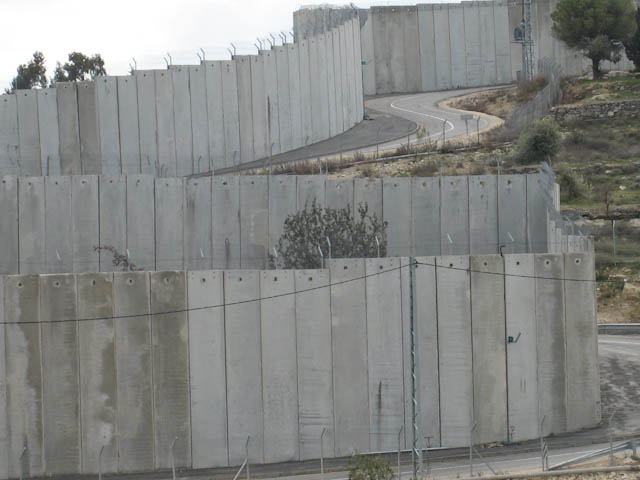
Separation Barrier, occupied West Bank
Everywhere we were privileged to speak with women in Palestine, we heard about how they hold Palestinian life together. Abu Dis was no different. We heard how the Israeli occupying force control so much of the women’s lives – permission to travel to access specialist medical care, where they can shop, who they can visit and they live in constant fear of detention and arrest, especially for their husbands and sons, or the not knowing what is happening to those already imprisoned. Yet they must be strong for their families by maintaining their health and earning an income where they can. They told me they have to hope things will get better or they risk being swallowed up by despair.
When I asked the women at the center what the space means to them they all started talking at once
“It is everything, it is home.”
“It gives us strength.”
“It is somewhere we can talk freely without fear.”
Palestinian women, Abu Dis
There was more said than could be interpreted at one time, but everyone was smiling and talking at the same time.
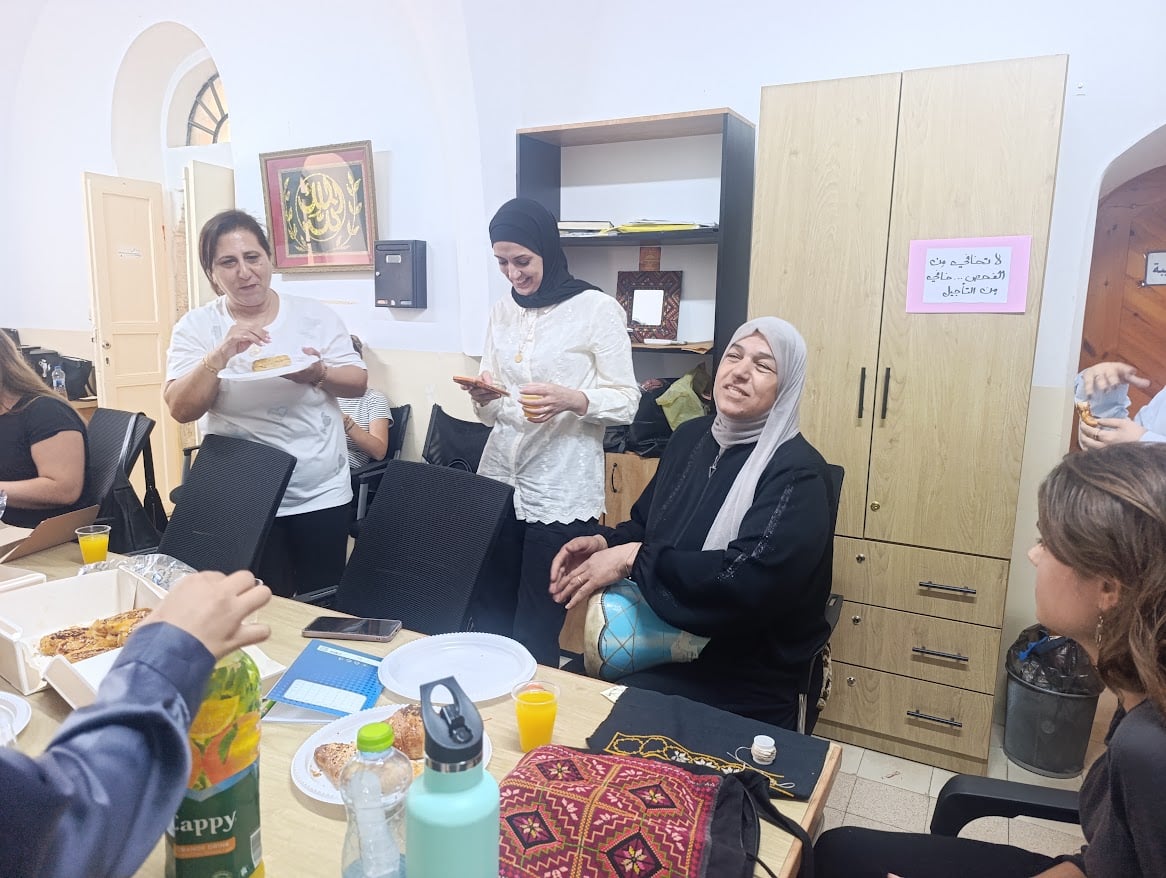
A birthday celebration at the centre, Abu Dis
Abu Dis was such a moving experience for me and having grown up in Northern Ireland during the Troubles helped me connect with what these women were experiencing. I remember living with the fear of being near a bomb, I remember armed soldiers and police officers on the streets, and the rifle pointed at my sister’s head, I remember being searched just to enter a shop, having my bags inspected every time I set off for university in England.
“But I could leave Northern Ireland”
Helen, Ecumenical Accompanier
But I could leave Northern Ireland and made the decision not to bring my children up there, to protect them from the prejudice, fear and violence. The Palestinian women I met do not have that same freedom. Israel’s occupation restricts their movement, the options they have for themselves and their families and ability to determine their own future. In Abu Dis, in the warmth of the welcome, in the stories of resistance, the privilege of that choice hit me full on.
“the privilege of that choice hit me full on.”
Helen, Ecumenical Accompanier
The Palestinians I met were also steadfast in their determination to remain on their land as a form of non-violent resistance.
Meeting these women reminded me of a passage I read in Kairos II, the call from Palestinian Christians to the global Church where it describes Palestinian women:
“Among the faces of steadfastness and hope in our society stands the Palestinian woman — grandmother, mother, sister and daughter. She is the unbending backbone and an essential partner in the struggle, holding together home, land, memory and future all at once.”
The Kairos II “A Moment of Truth: Faith in a Time of Genocide”, November 2025
Ultimately, what will stay with me is the people themselves. I was humbled by all I witnessed; by the strength and determination of the women to survive, by the joy and generosity in sharing their lives with us and by the hope they have that by us sharing their stories we might help to bring in an end to the military occupation of Palestine and justice and equality for all.
Take action
1. Invite Helen or one of our EAs to share their eyewitness testimonies at your event. EAs deliver talks for a broad range of audiences, in person and online. You can request a speaker by contacting us at eappi@quaker.org.uk.
2. Join the Time to Act campaign and email your elected representative to take action to end the UK’s support for Israel’s illegal occupation of Palestine.
3. Donate: The need for solidarity and accompaniment is more important than ever. Your support helps us maintain a solidarity presence in Palestine and Israel — witnessing human rights abuses and walking alongside communities under threat.
What does international law say?