

“You hear about the violence that occurs in the West Bank but being confronted with its visceral impact, on Palestinian children and families you’ve previously shared meals with is an experience I don’t think will ever leave me. ”
Rosie, Ecumenical Accompanier
In June, over twenty churches and faith organisations, including EAPPI UK & Ireland and Quakers in Britain, united for the first time to launch the Time to Act campaign as the Just Peace Coalition. They are calling on the UK government to take concrete measures to end its support for Israel’s illegal occupation of Palestine and support a just peace for all those who call the Holy Land home. Alongside our partner Christian Aid, we’ve interviewed some our Ecumenical Accompaniers whose faith led them to bear witness to the occupation. This is Rosie’s testimony.
My name is Rosie. I am a charity operations manager from London. Last year, I went to the Jordan Valley in the occupied West Bank with the Ecumenical Accompaniment Programme in Palestine and Israel (EAPPI).
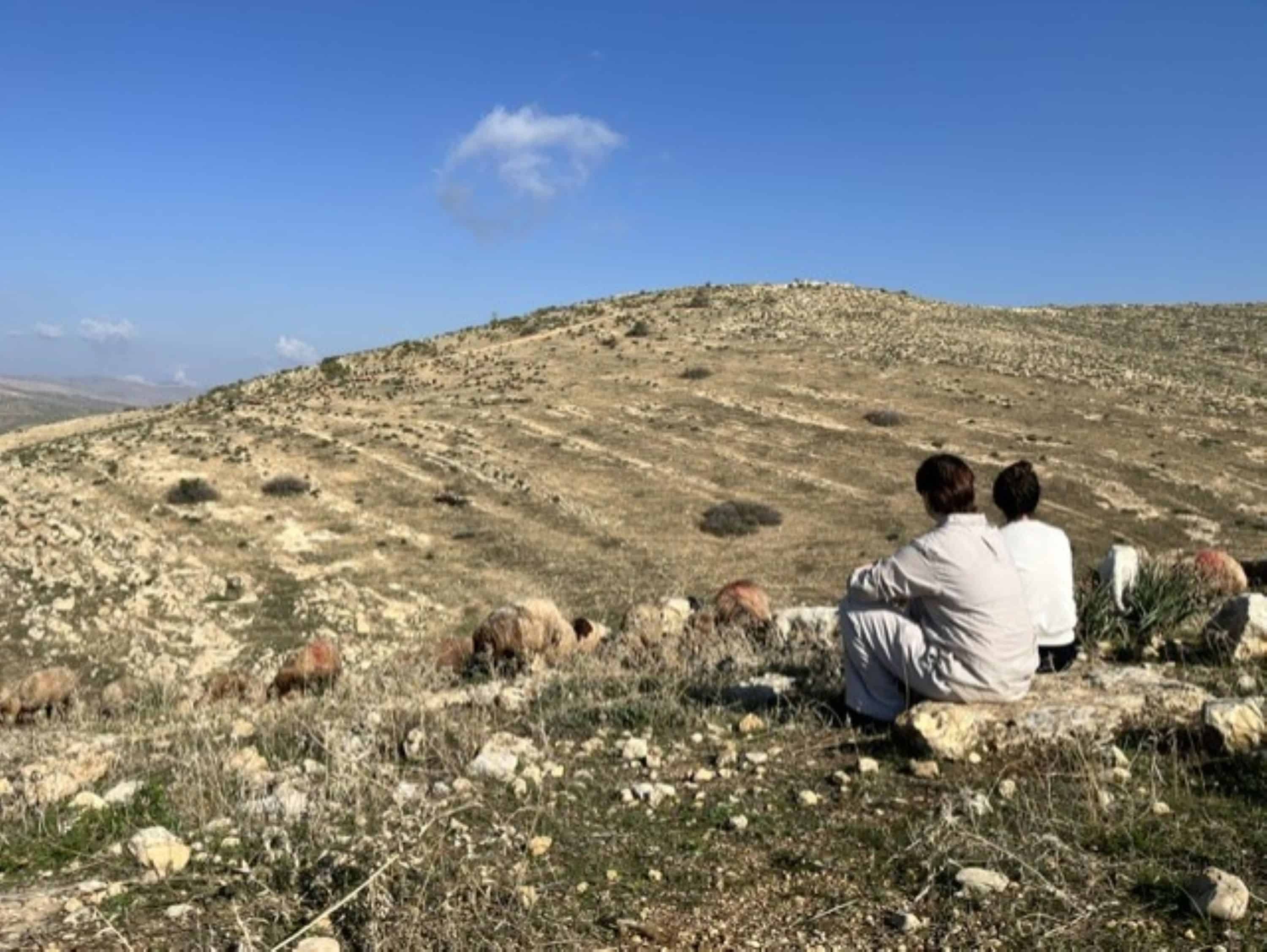
Rosie with a fellow EA overlooking hills with sheep in the Jordan Valley
I had visited the Holy Land twice on church pilgrimage tours prior to applying to be an Ecumenical Accompanier.
On those occasions we didn’t see the hard edge of Israel’s occupation of Palestine. However, I was still stunned by seeing the Separation Barrier, the checkpoints, and the Israeli military presence.
“It surprised me how little these things were discussed on the church tours.”
Rosie, Ecumenical Accompanier, London, UK
This started me on a journey of learning about the Israeli occupation, including completing a Masters in Gender Studies with a focus on the Middle East and writing about occupied Palestine for my dissertation. I wanted to do more, and EAPPI provided an opportunity to experience in person the realities I’d read about, to see firsthand the impact of the Israeli occupation.
“I also appreciated the accompaniment model, which is premised on only going where you’re invited and utilising your privilege to support those at risk, which feels like such a good model of solidarity.”
Rosie, UK
It was hard to know beforehand what daily life would be like.
Israeli checkpoints make travel across the occupied West Bank slow and difficult; there were hundreds of Israeli soldiers stationed in Palestinian East Jerusalem while I was there, and they often closed off roads unexpectedly. But my experience of these things was nothing compared to that of Palestinians. I saw Palestinians taken out of cars, searched, even blindfolded and handcuffed at checkpoints.
“What for me was an inconvenience, for Palestinians can be life-altering.”
Rosie, London, UK
I was based in the Jordan Valley, a region of the West Bank that borders Jordan to the east. We predominantly worked with farmers and shepherding communities and spent time visiting families, exchanging stories over cups of tea and coffee. These times were the most precious of anything I did while there – we were welcomed in with such generosity.
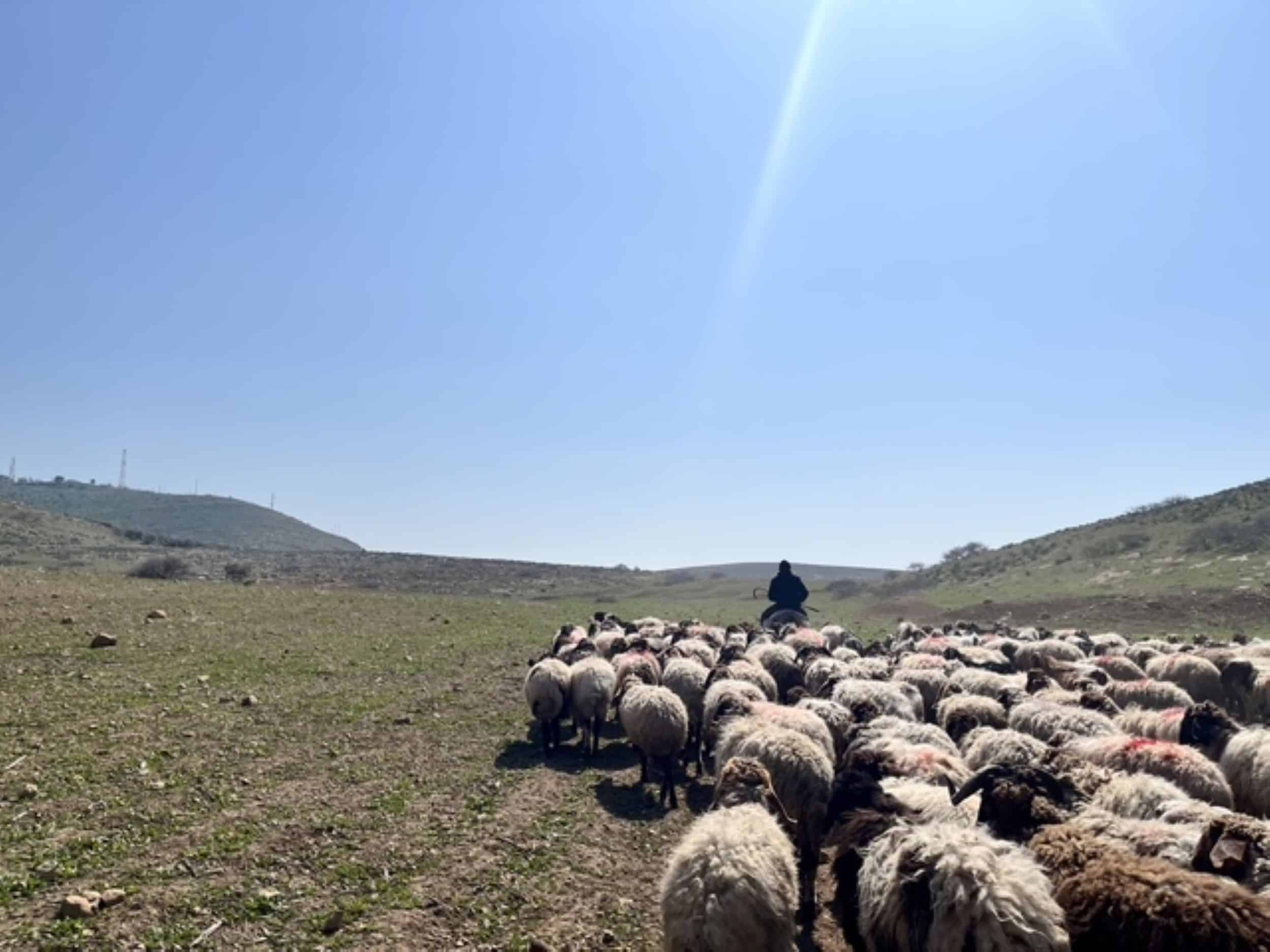
Palestinian shepherd sherpherding, Jordan Valley
We had the time and space to hear both about the struggles of life under Israeli occupation but also the joys of family life, good food, and their clear pride in their Palestinian culture. I’m a big food lover, so it was a joy to be able to exchange tips about how to make the best hummus, what they do with the olives they grow, and watch them make cheese from their own sheep.
We received such a warm welcome from the Palestinian communities we worked with. In the midst of hardship, more often than not, we were welcomed in like extensions of the family. Sometimes the Palestinians we met expressed their frustrations that they’ve been meeting people from overseas for years and talking about what’s happening to them and it seems that so little has changed, but for me this highlighted how important it would be to tell their stories when I returned.
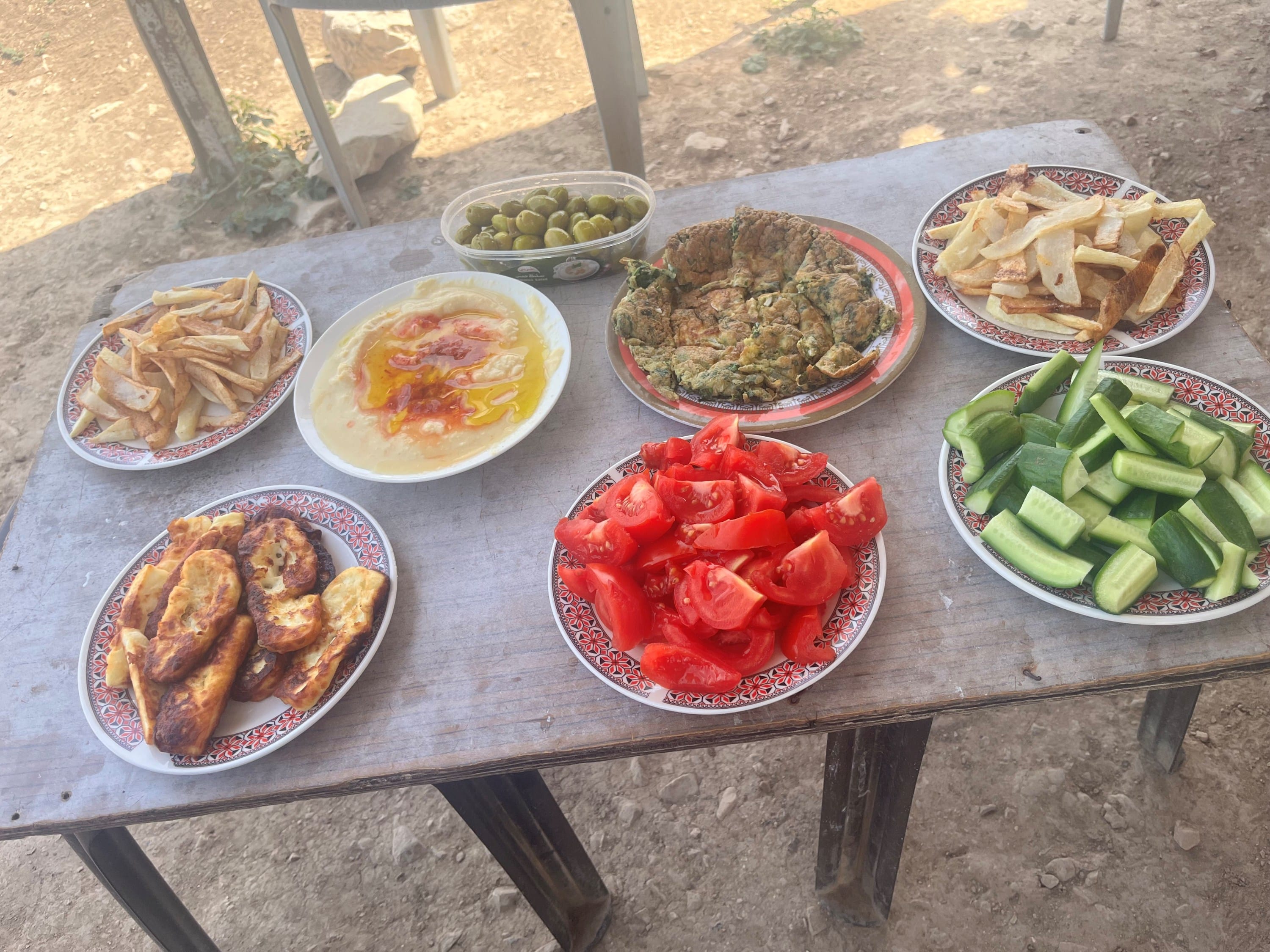
Palestinian food prepared for EAs by the communities they visited
It was also good to meet the many Israelis who were providing a protective presence in the West Bank or running human rights organisations, such as Rabbis for Human Rights and Jordan Valley Solidarity.
“In the UK news, the perspective is often that of the Israeli government, but there are many Israelis who are standing non-violently against occupation, putting themselves at risk by refusing the draft or staying in Palestinian communities as a protective presence.”
It was great to meet these people, and important to hear about the damage the Israeli occupation is doing to everyone who calls the Holy Land home.
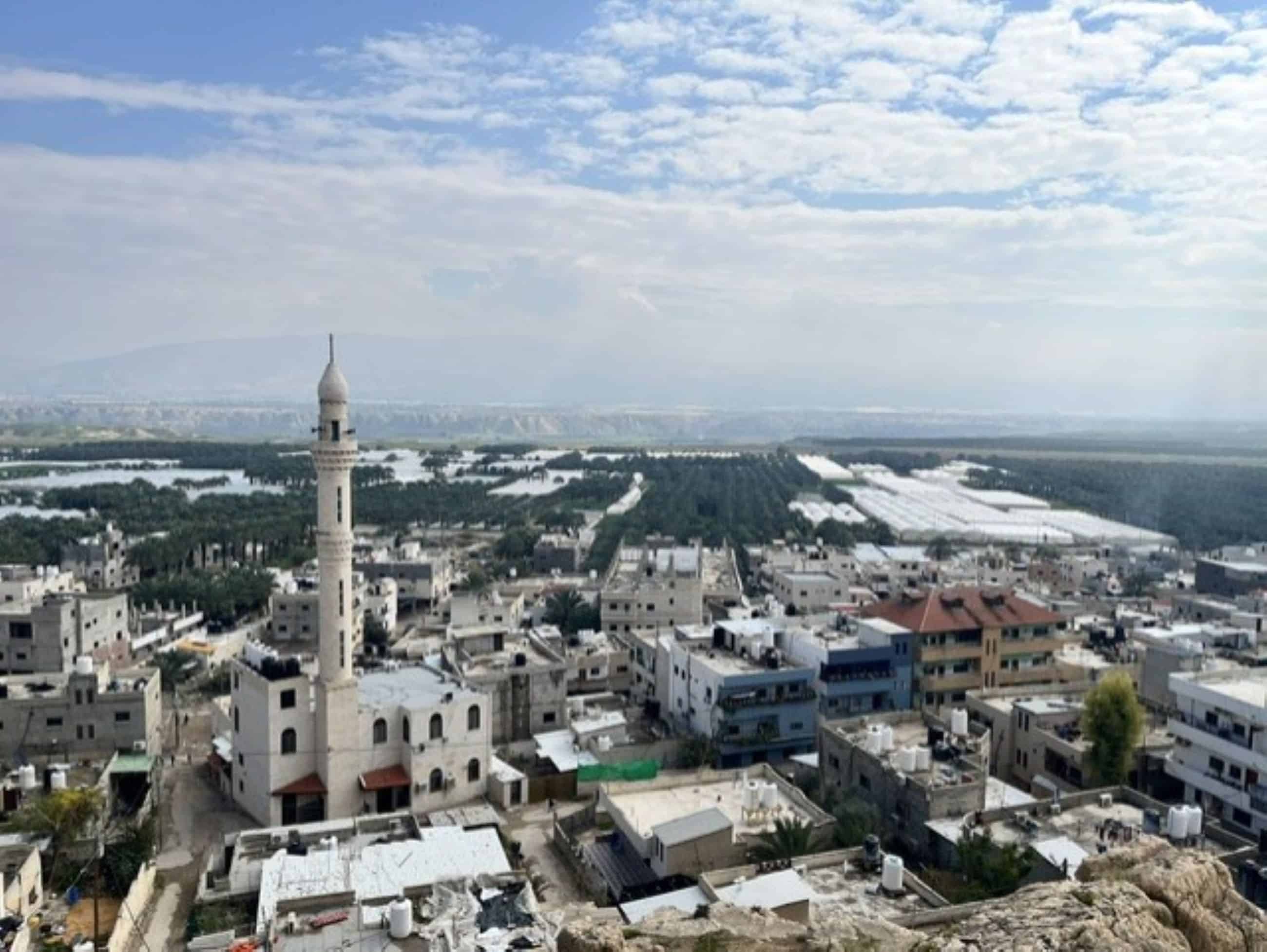
View of the occupied West Bank
Over my three months, I witnessed a whole range of things but two in particular will stick with me. Firstly, the Israeli occupation felt all-pervasive even in areas of the West Bank which don’t border Israeli land. You find yourself noticing so much more of your surroundings than in the UK, from the colour of number plates of cars (which illustrates whether they’re Palestinian, Israeli, or military), to what you’re carrying in your bag or which roads you’re driving down.
“I can’t begin to imagine the psychological impact of being hyper alert over a lifetime.”
Rosie, London, UK
Secondly, I’ll never forget sitting with Palestinian families as they show the injuries they received from Israeli settlers and military, or the damage to their properties. One morning, we visited a Palestinian family whose son had recently been released from Israeli military detention.
“He was 17–years–old, and had a visibly swollen face. He described beatings he’d received in prison, how he’d been given rotten food, and been repeatedly interrogated.”
Rosie, London, UK
This was the youngest person we met who had been treated this way, but there were many times we sat alongside Palestinians with newly-bandaged broken arms, who told us how they’d been beaten by Israeli settlers with iron rods, or with gashes on their heads from where they’d been forced to the ground by Israeli soldiers.
“You hear about the violence that occurs in the West Bank but being confronted with its visceral impact, on Palestinian children and families you’ve previously shared meals with is an experience I don’t think will ever leave me. ”
Rosie, London, UK
My three months with EAPPI truly were a life changing experience. It’s one thing to read about the Israeli occupation, watch the news, and, in my case, study the region. It’s another thing completely to experience the realities and to hear from Palestinian families impacted. Even a year after returning, I still have an overwhelming sense of gratitude and privilege for the experience. I was the recipient of such kindness and welcome from the Palestinians and Israelis we met, even in the midst of such hardship.
“It would have been understandable for them to be embittered and sceptical of the programme, but they were open with their homes and their stories, hopeful that we could change hearts and minds back in the UK.”
Rosie, UK
With that has come a responsibility as well as a drive to see change, to repay that trust and hope those families put in us.
For me, this wasn’t just a few months experience, but a stage in a long journey of solidarity with all those who call the Holy Land home and want to see a just and lasting peace.
Take action
1. Invite Rosie or one of our EAs to share their eyewitness testimonies at your event. EAs deliver talks for a broad range of audiences, in person and online. You can request a speaker by contacting us at eappi@quaker.org.uk.
2. Join the Time to Act campaign and email your elected representative to take action to end the UK’s support for Israel’s illegal occupation of Palestine.
3. Donate: The need for solidarity and accompaniment is more important than ever. Your support helps us maintain a solidarity presence in Palestine and Israel — witnessing human rights abuses and walking alongside communities under threat.
What does international law say?