

We stand on the edge of the Naqab desert in the South Hebron Hills of the occupied West Bank. Aya is showing us her family’s cactus farm. On the desert slopes are hundreds of cactus plants, a symbol of Palestinian steadfastness under occupation. The hills behind are patches of beige, brown and white, stretching away to the horizon.
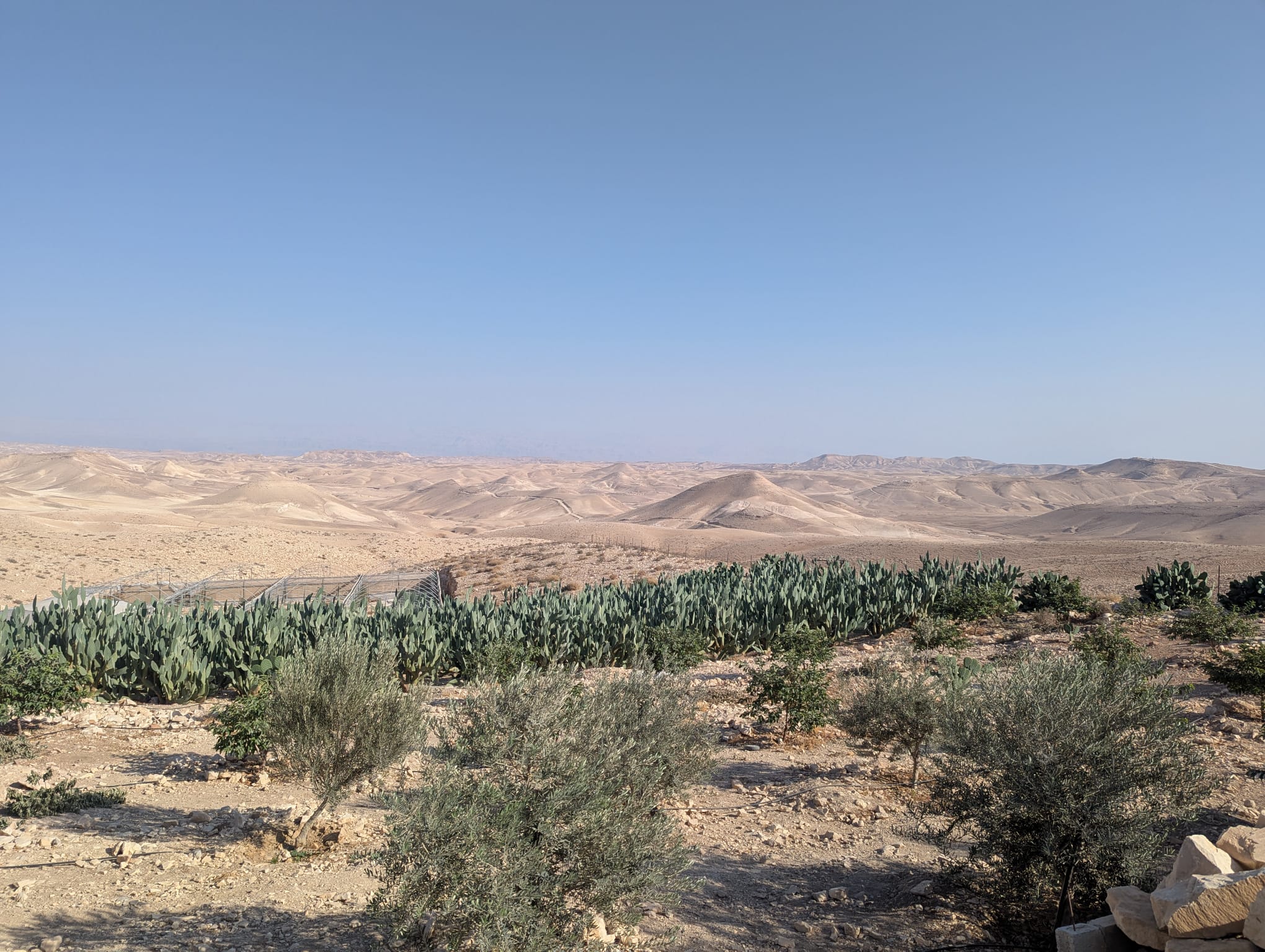
Aya’s family catcus farm in the South Hebron hills
The prickly pear cactus (Opuntia ficus-indica) has long marked village boundaries and fields in Palestine. Hardy and drought-resistant, it thrives without irrigation. After the 1948 Nakba or catastrophe, when 750,000 Palestinians were forced off their land, many villages and cactus hedges were destroyed and replaced with pine plantations, but in many places the cactus returned. The plant symbolizes Palestinian perseverance. The Arabic word for cactus – ṣabbar (صَبَّار) – means patience and perseverance, and there is a saying in Palestine: ‘ṣaber aṣ-ṣabbār’, ‘the patience of the cactus’.
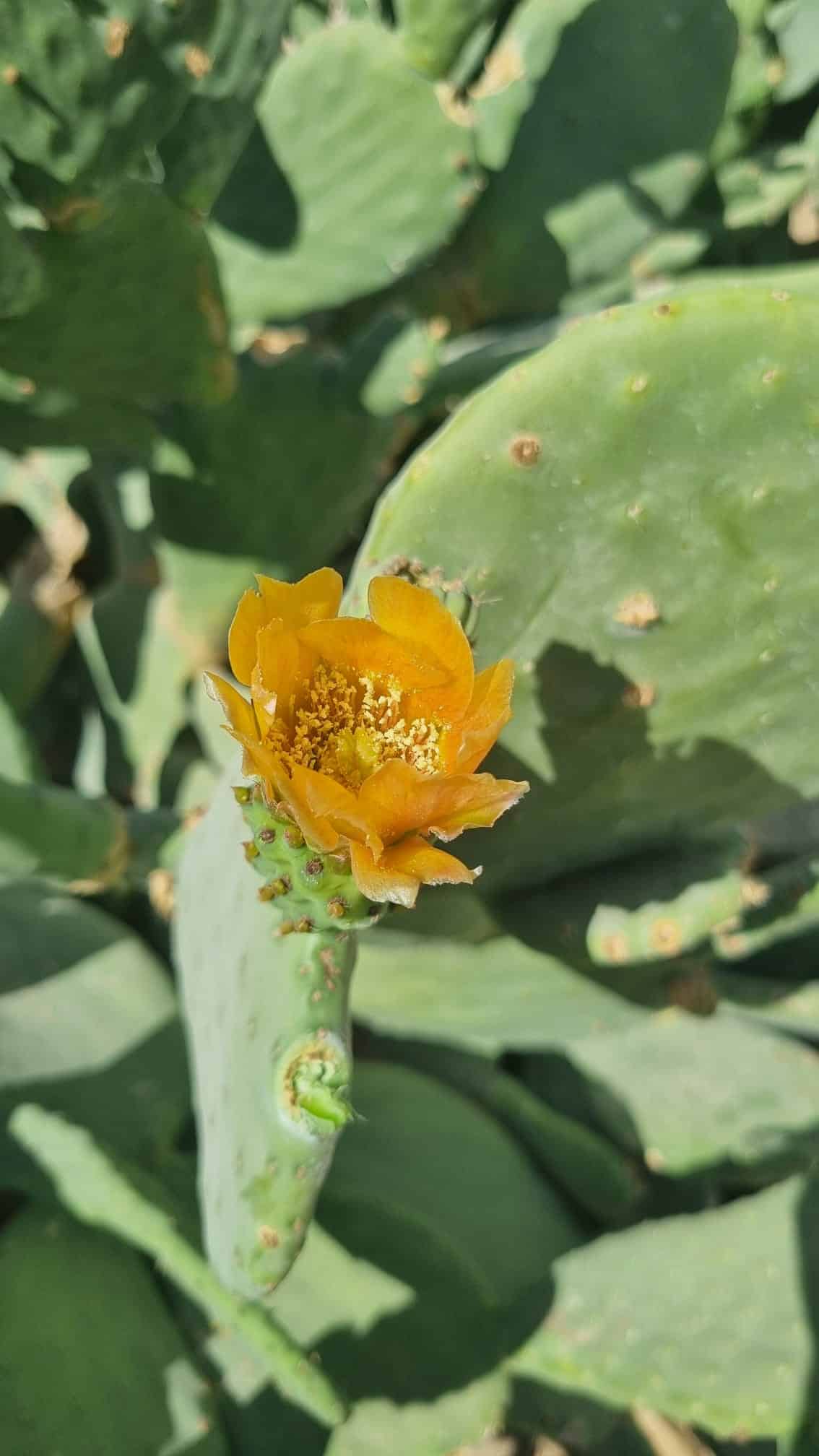
Prickly pear cactus flower
Aya and her family moved from a nearby town when Aya was 16. She says that at first it was difficult to be so far away from her school friends and community. 12 years later, she loves the open space and desert environment. She talks thrillingly of hiking in the desert with her father, Adel, and her siblings.
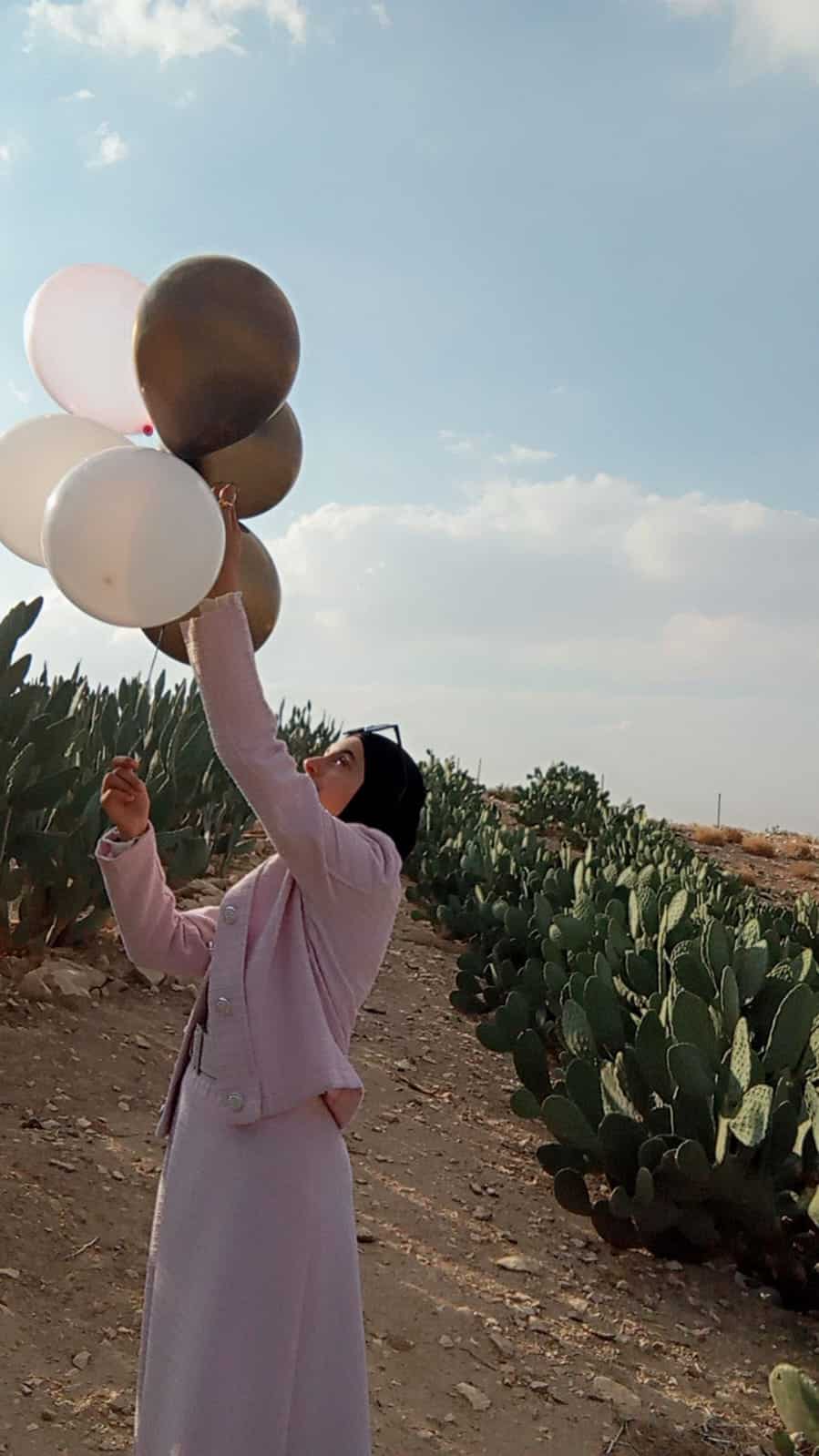
Aya with balloons and cactus plants
But today the family faces risks that did not exist when they first arrived. The illegal Israeli settlement which was established near the Palestinian town of Bani Naim in 1982, has spawned four illegal outposts (informal settler structures) in the past two years. Israeli settlers from the outposts harass Aya’s family and the local Palestinian population and make their lives more difficult. Aya’s younger siblings had to change schools because they were attacked by settlers when traveling to their old school. Aya describes how settlers come to the farm and damage the cactus plants. Sometimes they come right into the house and demand to see the property deeds. Aya remembers one particular night when the settlers came and ambushed and beat her brother on the head.
‘It was horrible. We couldn’t get an ambulance because the hospital is a long distance away from here.’
Aya, South Hebron Hills
The settlers make it hard for the family to plant and care for their crops or think about developing the farm. Settlers vandalised Adel’s tractor to stop him from ploughing and extending the area under cultivation. Now the tractor sits outside the compound, its window broken. Adel can’t afford to get the tractor repaired when it could be wrecked again. He knows that if the settlers see him using the tractor, they will come to stop him.
Aya is an English teacher and helps to supplement the family income by giving online English lessons. The internet connection is poor and when the signal is weak she has to go up onto the roof to be able to connect, even if it is cold. The family has only one solar panel so there is no electricity in the evening and it is not possible to give classes. But Aya loves her work, explaining how she helps her pupils to understand English and takes pride in their success:
‘I feel happy too because I give them something from my heart. And that’s the good thing, you make something from your heart, from inside your heart, and you see the good result. I lose track of the time when I’m teaching.’
Aya
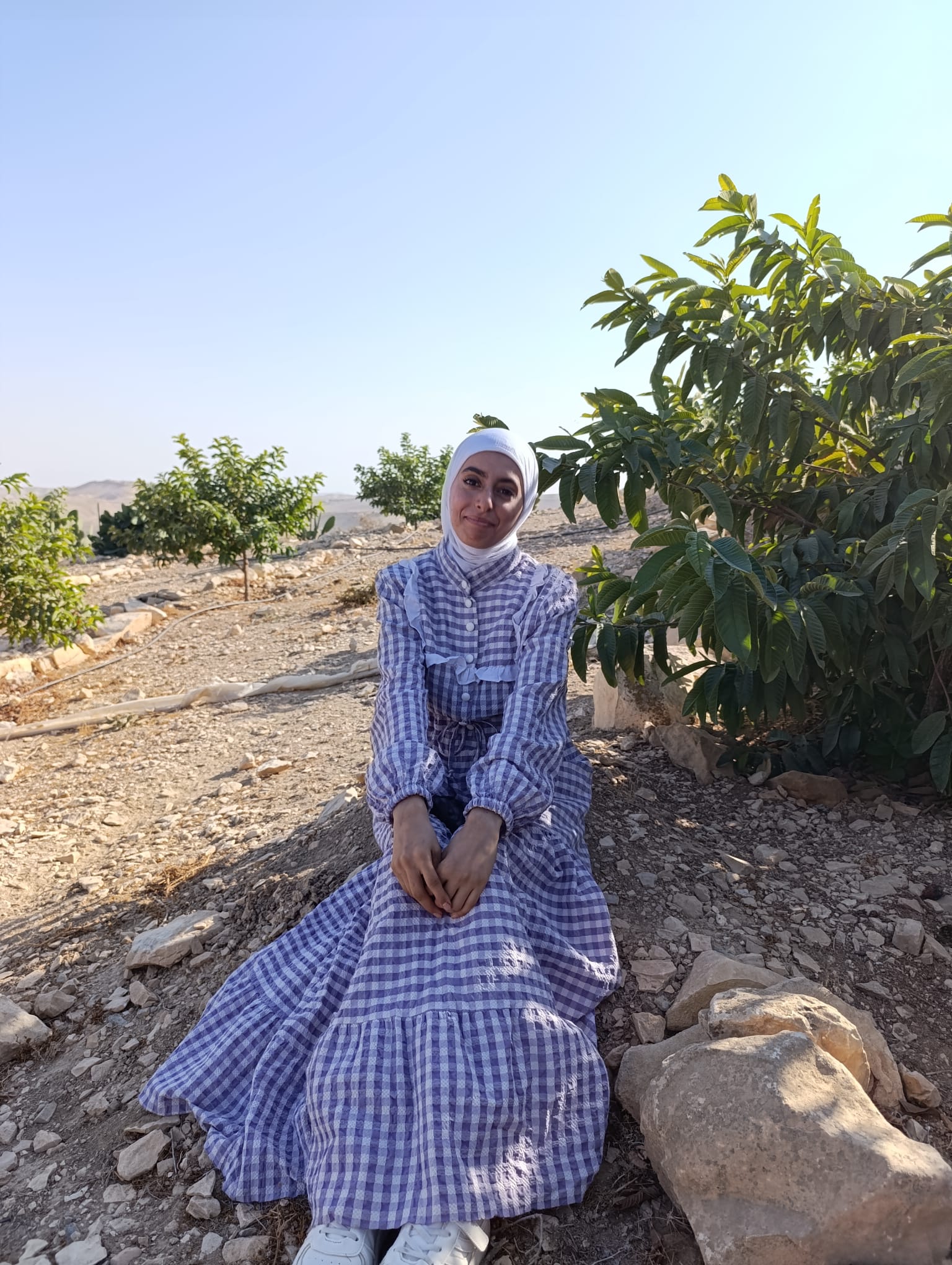
Aya sitting in her family’s cactus farm, South Hebron Hills
But recently the family had another blow. In September the Israeli army burst into the house and tried to arrest Aya’s father, Adel. Soldiers pushed him into a jeep and locked the family in one room, ransacking the house and breaking Aya’s laptop. Since then, Aya has had to use her mobile phone to give the classes. The screen is much smaller and she can’t use teaching tools.
Adel wants to expand his farm and has stored large water tanks to cope with scarcity. He hopes to bring water from Bani Naim, but unclear planning boundaries mean no authority will take responsibility. The family now call their address ‘the Bermuda triangle’, feeling they have disappeared from the map.
Electricity is another challenge. Adel has one solar panel but needs more to power equipment and provide light at night. For now, the children do homework by candlelight and Aya struggles to teach online when the signal is weak. Increasing number of settler attacks on their household and village’s infrastructure make improvements even harder.
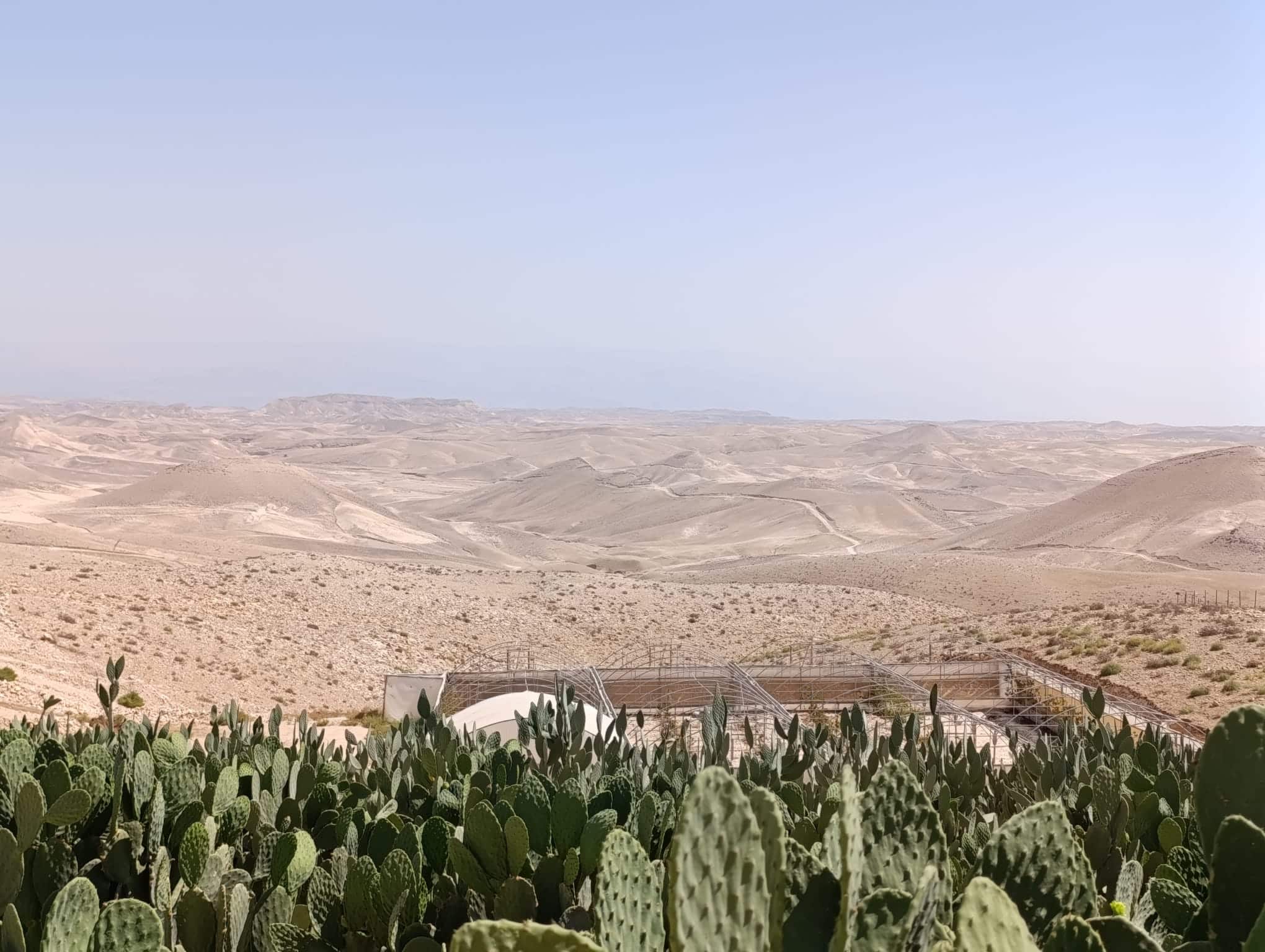
View towards the Dead Sea from cactus farm
The settlers’ attacks to force Palestinians like Aya’s family off their land have worsened over the past two years. The UN Office for the Coordination of Humanitarian Affairs (OCHA) says settler violence in the West Bank has reached “unprecedented levels”. Since 7 October 2023, 558 Palestinians households – 3,095 people – across the West Bank have been displaced from their homes. This includes 1,544 children. The people affected say they have had to leave because of attacks by Israeli settlers and restrictions on accessing their land. The settlers smash infrastructure including solar panels, water tanks and pipes, leaving families or even whole villages without electricity or water for days.
But settlers are not rogue elements acting alone. Israeli human rights organisation B’Tselem describes how they serve as a state tool to appropriate more Palestinian land:
‘On the one hand, Israel has taken over some areas using official means: issuing military orders, declaring areas “state land,” a “firing zone” or a “nature reserve”, and expropriating land. In other places, the land has been effectively taken over by settlers through daily acts of violence, including attacks on Palestinians and their property. The two tracks appear unrelated [..] yet in truth, there is only one track: Settler violence against Palestinians serves as a major informal tool at the hands of the state to take over more and more West Bank land.’
Furthermore, the first line of the Fundamental Guiding Principles agreed by Israeli Government that took office in December 2022, states:
‘The Jewish people have an exclusive and indisputable right to all parts of the Land of Israel. The Government will promote and develop settlement in all parts of the Land of Israel – the Galilee, the Negev, the Golan and Judea and Samaria.’
Fundamental Guiding Principles, Israeli government
*Judea and Samaria is the name given by the Israeli government to the occupied West Bank.
Since then, settlements have been given funding, equipment and powers to harass Palestinians. The International Court of Justice 2024 advisory opinion states that Israel’s presence in the West Bank is illegal.
From the settlers’ perspective, Aya’s family’s cactus farm is blocking the further extension of settler outposts and settlements. This is why the family is being targeted. Many of the difficulties they face are new and did not exist before the settler outposts were set up.
‘The state fully supports and assists the settlers’ acts of violence, and its agents sometimes participate in them directly.’
Aya knows that her community faces many challenges: they need water, electricity, and other essentials. She feels that her community needs to be part of a local authority that could enable people to work together. Aya dreams of a future where everyone lives in peace, where people are safe when they go out and are not afraid.
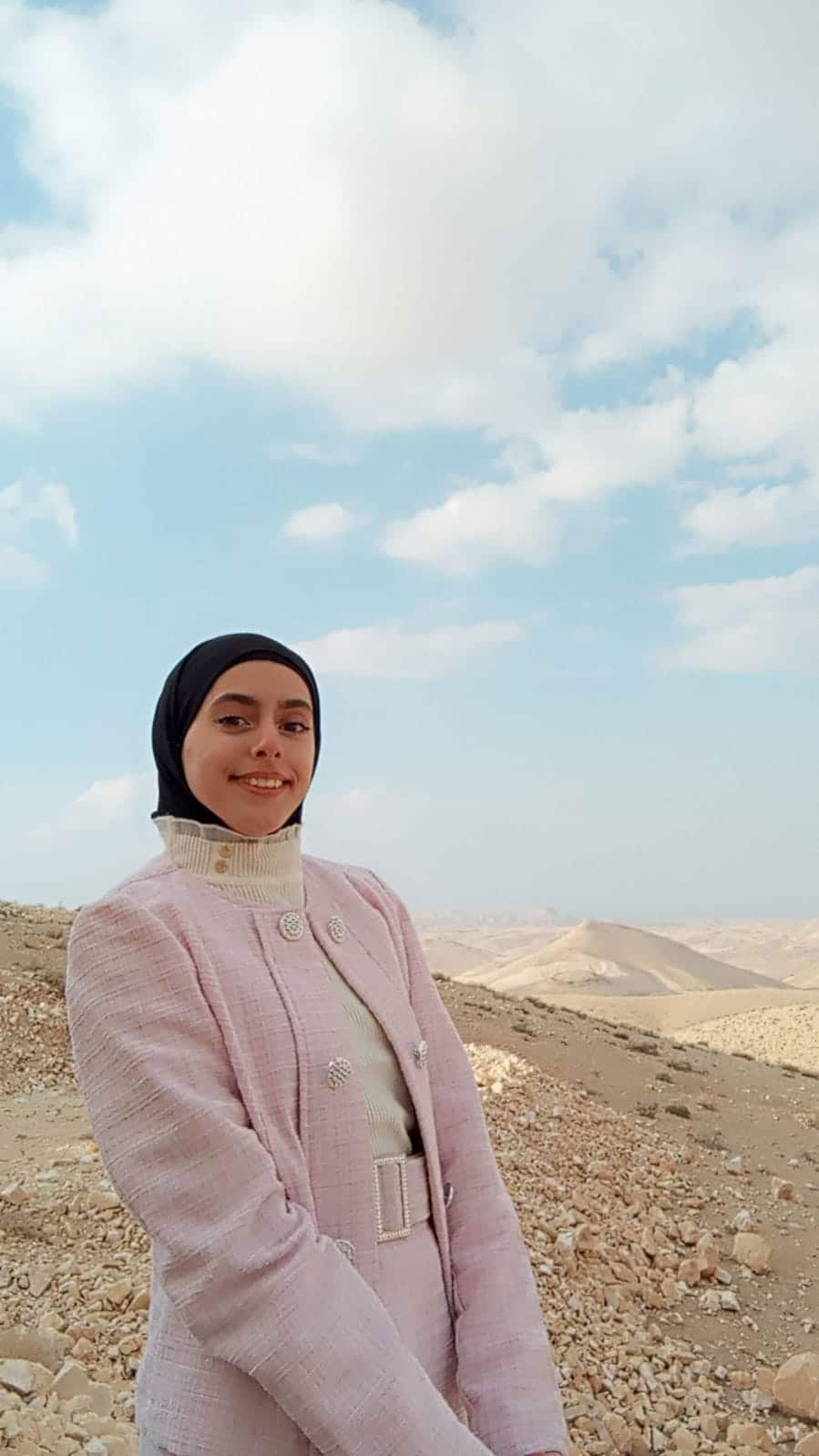
Aya, South Hebron Hills
Take action to support Palestinian villagers
-
Send this blog post to your MP or TD and urge them to speak out in Parliament and publicly about the urgent need to end Israeli occupation of the West Bank.
-
Read the report by Israeli human rights organization B’tselem ‘State Business: Israel’s misappropriate of land in the West Bank through settler violence’ and demand that the UK / Irish government take a stand against these violations of international law and push for accountability.
-
The need for solidarity and accompaniment is more important than ever. We can’t do this without you. Your support helps us maintain a solidarity presence in Palestine and Israel — witnessing human rights abuses and walking alongside communities under threat. Donate today.
What does international law say?